
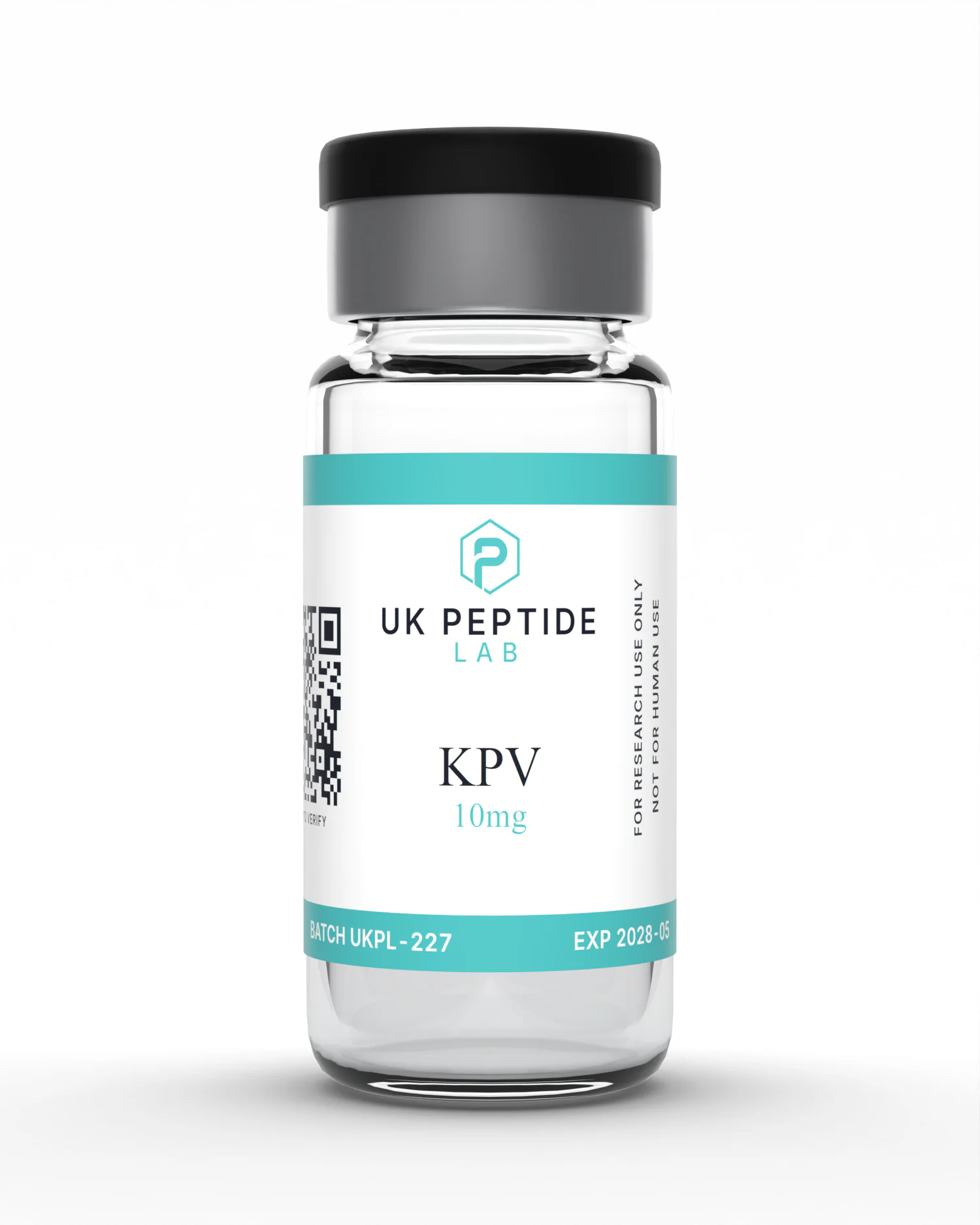
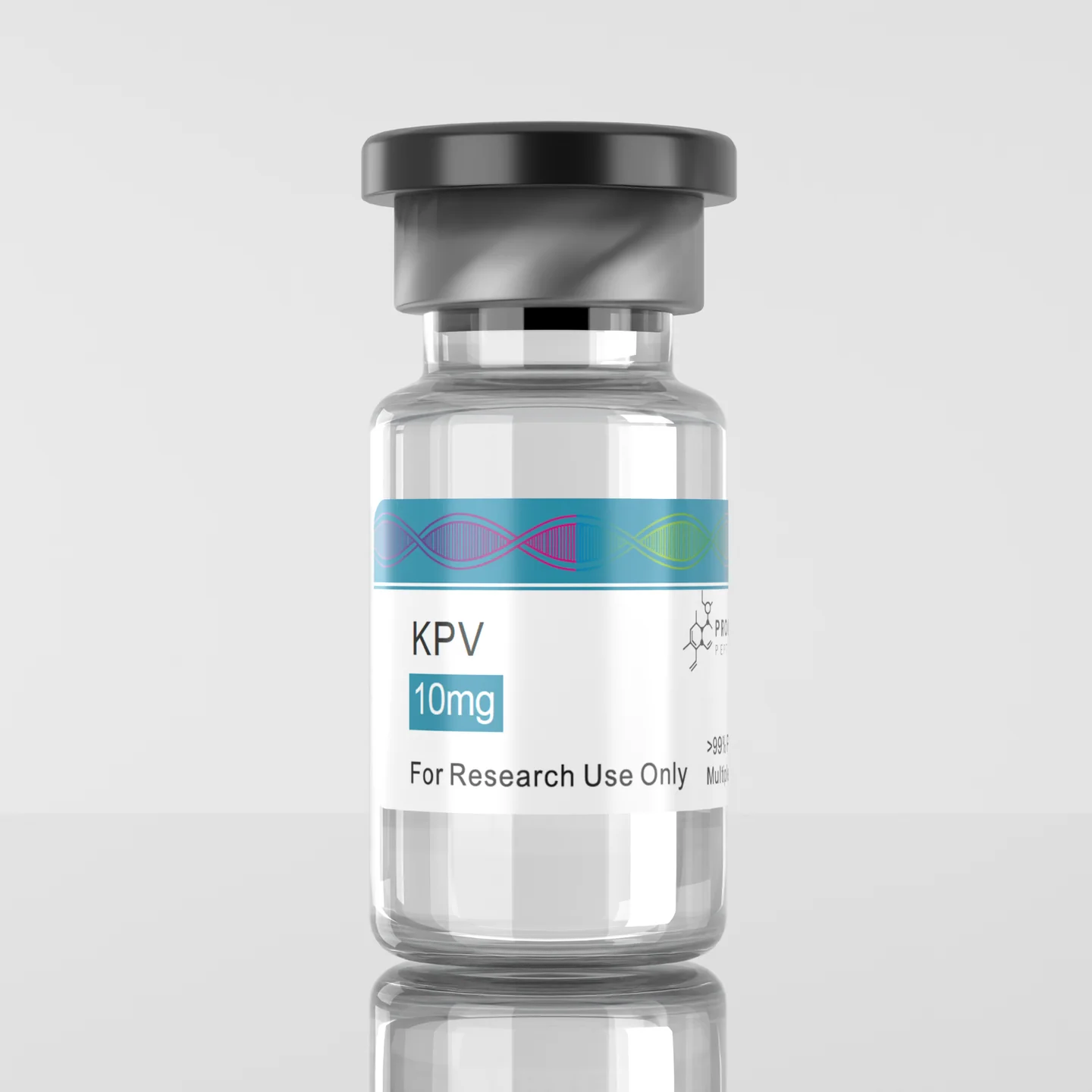
KPV Peptide Capsules (Lysine-Proline-Valine) is a naturally occurring tripeptide that constitutes the C-terminal sequence of α-melanocyte-stimulating hormone (α-MSH), a neuropeptide with potent antipyretic, antimicrobial, and anti-inflammatory properties.
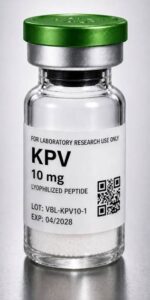
KPV (Lysine-Proline-Valine) is a naturally occurring tripeptide that constitutes the C-terminal sequence of α-melanocyte-stimulating hormone (α-MSH), a neuropeptide with potent antipyretic, antimicrobial, and anti-inflammatory properties.
Unlike its parent molecule, which comprises thirteen amino acids and carries significant pigmentation effects that limit its therapeutic utility, KPV Peptide retains the core anti-inflammatory activity of α-MSH while offering a more favorable profile for pharmaceutical and cosmetic applications. The tripeptide has emerged as a compelling candidate for the management of inflammatory conditions, wound healing, and metabolic disorders, with growing interest in its production, characterization, and formulation.
This production description provides a comprehensive overview of KPV peptide, encompassing its chemical identity, biological origin, mechanism of action, manufacturing methodologies, quality control specifications, formulation strategies, and regulatory considerations. The document is intended for researchers, manufacturers, and formulators seeking detailed technical insight into this remarkable tripeptide.
2. Chemical Identity and Structural Characteristics
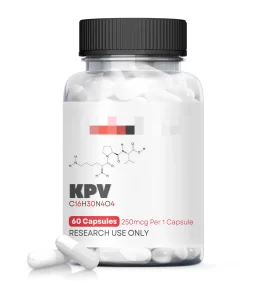
KPV Peptide is a linear tripeptide composed of three amino acid residues: lysine (Lys, K), proline (Pro, P), and valine (Val, V), arranged in the sequence Lys-Pro-Val. The molecular formula corresponds to C₁₅H₃₀N₄O₄, with a molecular weight of approximately 342.43 g/mol. The peptide is characterized by a basic lysine residue at the N-terminus, a cyclic proline residue in the center, and a branched-chain valine residue at the C-terminus. This arrangement creates a distinct electrostatic and hydrophobic interaction profile that underpins the peptide’s biological activities.
The presence of proline at the second position introduces a conformational constraint that influences the peptide’s secondary structure and receptor interactions. The lysine side chain provides a positive charge at physiological pH, while the valine residue contributes hydrophobic character. These physicochemical properties collectively determine the peptide’s solubility, membrane permeability, and stability profiles.
KPV Peptide is typically produced as a lyophilized powder, appearing white to off-white in color. The peptide is highly hydrophilic, which contributes to its poor passive skin penetration and necessitates specialized delivery strategies for topical applications. The N-acetylated and C-amidated forms of KPV Peptide exhibit similar biological activity to the unmodified tripeptide and are often employed to enhance stability against exopeptidase degradation.
3.1 Biosynthetic Origin
KPV Peptide is derived from α-MSH, a thirteen-amino-acid peptide produced by post-translational processing of the larger precursor molecule proopiomelanocortin (POMC). α-MSH is secreted by multiple cell types, including pituitary cells, monocytes, melanocytes, and keratinocytes, and is found in the skin, human epidermis, and the mucosal barrier of the gastrointestinal tract.
The active message sequence for the antipyretic and anti-inflammatory activities of α-MSH resides specifically in its carboxy-terminal KPV sequence, which exhibits activities that parallel but are more potent than those of the parent molecule.
3.2 Anti-Inflammatory Mechanisms
The anti-inflammatory effects of KPV are mediated through mechanisms that are distinct from those of the core α-MSH sequence. Research has demonstrated that KPV is unlikely to mediate its effects through melanocortin receptors, as it does not bind to MC1R and fails to increase cAMP accumulation. Instead, KPV appears to act through inhibition of interleukin-1β (IL-1β) functions and modulation of key inflammatory signaling pathways.
At the molecular level, nanomolar concentrations of KPV inhibit the activation of NF-κB and MAP kinase inflammatory signaling pathways, reducing the secretion of pro-inflammatory cytokines. KPV regulates IL-1β production through antioxidant activity and combats inflammation by targeting both transcriptional and post-translational mechanisms.
Studies in human keratinocytes have shown that KPV inhibits reactive oxygen species (ROS) production, which is responsible for activating extracellular signal-regulated kinase and p38 mitogen-activated protein kinase. Additionally, KPV decreases the expression of apoptosis-related proteins including Bax, Bcl-2, and cleaved caspase-3, while suppressing the redox-sensitive transcription factor NF-κB.
3.3 Antimicrobial Activity
Beyond its anti-inflammatory properties, KPV exhibits antimicrobial activity against Staphylococcus aureus and Candida albicans, making its therapeutic use particularly attractive in cases where infection and inflammation coexist. This dual functionality positions KPV as a versatile agent for conditions characterized by both microbial invasion and inflammatory responses.
3.4 Metabolic Effects
Emerging research has expanded the understanding of KPV’s biological activities to include metabolic regulation. KPV Peptide has been shown to attenuate adipogenesis and lipid metabolism through modulation of ROS-mediated AKT/mTORC1/PPARγ signaling. In 3T3-L1 preadipocytes, KPV treatment dose-dependently suppressed adipocyte differentiation, reducing Oil Red O staining intensity by approximately 55% and intracellular triglyceride content by approximately 38% compared to controls.
In vivo, oral administration of KPV alleviated body weight gain, white adipose tissue expansion, and obesity-associated dyslipidemia in high-fat diet-induced obesity mouse models. These findings suggest potential applications for KPV in the management of obesity-related metabolic dysfunction.
4.1 Solid-Phase Peptide Synthesis
Solid-phase peptide synthesis (SPPS) represents the most widely employed methodology for KPV Peptide production. This approach offers significant advantages including high flexibility, existing automation capabilities, and the ability to synthesize products at scales ranging from milligrams to hundreds of milligrams. The general principle of SPPS involves the sequential addition of protected amino acids to a growing peptide chain anchored to an insoluble resin support.
A typical SPPS protocol for KPV production involves several key steps. First, the resin is pretreated and deprotected using a solution of piperidine in dimethylformamide (DMF) to remove the Fmoc protecting group from the resin-bound amino acid. The peptide chain is then extended through successive coupling reactions, with each amino acid added in activated form. For KPV synthesis, the resin is typically loaded with valine as the C-terminal residue, followed by coupling of proline and finally lysine at the N-terminus.
The synthesis can be performed using various solid-phase matrices, including GentaGel SRAM resin or polymer-bonded polyoxyethylene-RAM resin as the synthetic solid phase matrix. Following chain assembly, the peptide is cleaved from the resin using trifluoroacetic acid (TFA), which simultaneously removes side-chain protecting groups. The crude peptide is then purified, typically by reverse-phase high-performance liquid chromatography (RP-HPLC).
4.2 Solution-Phase Synthesis
For industrial-scale production, solution-phase synthesis offers the advantage of preparing large quantities of product in a single batch without the use of resin-supported reagents. This method is considered the method of choice for industrial peptide synthesis. An improved process for the preparation of diamide derivatives of KPV has been developed, utilizing a multi-stage, solution-phase approach starting from N,N’-diprotected lysine and optionally carboxy-protected proline compounds.
The solution-phase synthesis involves specific combinations of protecting groups and coupling reagents. A diprotected lysine compound is reacted with an optionally protected proline compound in the presence of an activating or coupling reagent to form a protected dipeptide. This is followed by coupling with a valinamide compound and subsequent cleavage of protecting groups to yield the desired KPV derivative. This approach enables the production of KPV diamide derivatives with high efficiency and scalability.
4.3 Synthesis Considerations
The synthesis process significantly affects the activity of the final product, making it essential to ensure the accuracy and stability of the peptide sequence. Key considerations in KPV manufacturing include the selection of appropriate protecting groups, optimization of coupling conditions, and implementation of robust purification protocols. The stereochemistry of each amino acid residue must be carefully controlled, as the synthesis can be performed with any stereoisomer of lysine, proline, or valine. However, the L-configuration is typically preferred for biological activity.
5.1 Identity and Purity Testing
Quality control of KPV peptide production involves rigorous analytical testing to ensure identity, purity, and safety. Molecular weight confirmation is typically performed using mass spectrometry, with the observed molecular weight corresponding to the expected value of approximately 342.30-342.43 g/mol. Purity is assessed by RP-HPLC, with specifications typically requiring greater than 95% purity, though higher purity levels (>98%) are achievable and often specified for research-grade material.
A representative certificate of analysis for KPV Peptide acetate salt reports a molecular weight of 342.30 by mass spectrometry (conforming to specification) and a purity of 96.436% by HPLC. Higher-grade material may achieve purity levels of 98% or greater, with endotoxin content maintained below 0.25 EU/mg.
5.2 Physicochemical Characterization
KPV Peptide is characterized as a white to off-white lyophilized powder. The peptide content, moisture content, and trifluoroacetic acid (TFA) content should be determined and documented as part of the certificate of analysis. For products intended for sensitive applications, TFA removal may be specified, yielding the acetate salt form.
5.3 Safety Testing
Comprehensive safety testing of KPV Peptide includes endotoxin testing using the Limulus Amebocyte Lysate (LAL) method, heavy metals testing according to USP <233>, and microbial testing per USP <61>. These tests ensure that the peptide meets established safety criteria for research and potential pharmaceutical applications. The multi-point quality verification approach employed by reputable manufacturers includes assessment of identity, purity, net content, multi-vial variance, endotoxins, heavy metals, and microbial contamination.
6.1 Routes of Administration
KPV Peptide has been explored through multiple routes of administration, each with distinct considerations for formulation and delivery. The oral route is the most extensively studied, owing to the peptide’s uptake via the intestinal peptide transporter PepT1 (SLC15A1) and its relevance to gastrointestinal inflammatory conditions. Topical formulations have been developed for dermatological applications, while subcutaneous injection provides systemic delivery for research purposes.
6.2 Topical and Transdermal Delivery
The high hydrophilicity of KPV Peptide results in poor passive skin penetration, necessitating enhancement strategies for topical delivery. Transdermal iontophoretic delivery across microporated human skin has been investigated as a method to enhance KPV permeation. Formulation approaches incorporating permeation enhancers such as Tremella fuciformis (snow mushroom) extract and DMSO have shown promise in improving the absorption and bioavailability of KPV and related peptides.
6.3 Nanoparticle and Targeted Delivery Systems
Advanced delivery systems have been developed to overcome the pharmacokinetic limitations of KPV Peptide. Orally targeted delivery of KPV Peptide via hyaluronic acid-functionalized nanoparticles has been shown to efficiently alleviate ulcerative colitis in preclinical models. The encapsulation of KPV in chitosan/sodium alginate nanoparticles has been studied for interaction with Caco-2 cell membranes, demonstrating potential for enhanced intestinal uptake. Covalent incorporation of KPV into hyaluronic acid hydrogels has also been explored, achieving conjugation rates of approximately 2.5% and enabling therapeutically relevant doses for inflammatory bowel disease treatment.
6.4 Prodrug Strategies
To address the short plasma half-life of KPV Peptide and improve oral bioavailability, prodrug approaches have been investigated. Oral therapy with proKPV, a prodrug formulation, has been shown to significantly suppress the expression of pro-inflammatory cytokines including TNF-α, IL-6, and IL-1β in mouse models of acute lung injury, with enhanced anti-inflammatory effects compared to free KPV treatment.
KPV peptide exhibits limited stability in aqueous solution, with a short plasma half-life typically measured in minutes to low single-digit hours due to serum protease cleavage. This short systemic half-life makes the route of administration a critical determinant of effectiveness, as delivery format rather than dose alone governs the duration of action. As a tripeptide, KPV may survive gastric transit and absorb via intestinal peptide transporters, particularly PepT1, which is expressed in the gastrointestinal tract.
For storage, lyophilized KPV Peptide should be maintained at -20°C or below for long-term stability. The peptide should be protected from light, moisture, and heat. Once reconstituted, KPV solutions should be stored at 2-8°C (refrigerator) and used within a defined period to prevent degradation. Smaller in size and more chemically stable than α-MSH, KPV Peptide offers practical advantages for formulation development and storage.
8.1 Inflammatory Bowel Disease
KPV Peptide has demonstrated significant therapeutic potential in preclinical models of inflammatory bowel disease (IBD). The peptide has been shown to reduce intestinal inflammation through PepT1-mediated uptake, with studies demonstrating decreased tumorigenesis in colitis-associated cancer models. The anti-inflammatory effects of KPV in IBD models are mediated through inhibition of NF-κB activation and reduction of pro-inflammatory cytokine secretion.
8.2 Skin Inflammation and Wound Healing
The protective effects of KPV Peptide against environmental pollutant-induced skin damage have been investigated in human keratinocytes and three-dimensional skin models. KPV restores cell viability and reduces IL-1β secretion disrupted by fine particulate matter (PM10) exposure, mitigates PM10-induced pyroptosis, and holds potential as a therapeutic agent for preventing environmental pollutant-related skin damage. These findings support applications in functional cosmetics and skin-protective treatments.
8.3 Metabolic Disorders
Emerging research has identified KPV Peptide as a potential candidate for the prevention and management of obesity. The peptide suppresses adipocyte differentiation through modulation of ROS-related AKT/mTOR/PPARγ signaling, reduces lipid accumulation, and decreases FAS expression during adipocyte differentiation. In vivo studies have demonstrated that oral KPV administration alleviates body weight gain and obesity-associated dyslipidemia in high-fat diet-induced obesity mouse models.
9.1 Safety Profile
The safety profile of KPV Peptide has not been well characterized in humans due to the absence of completed human clinical trials. Most safety impressions derive from short-term animal studies, which cannot predict the effects of long-term use in humans. Based on route of delivery, anecdotally reported and clinically expected effects are generally mild and include injection-site redness or irritation (subcutaneous), stomach upset (oral), and local skin irritation (topical). The potential for immunogenicity, the risk that a peptide product or its impurities may trigger an unwanted immune response, is a consideration for all synthetic peptides and is closely tied to manufacturing quality.
9.2 Regulatory Landscape
KPV Peptide is approved by the FDA as a medication, and no published human randomized controlled trials exist that establish benefit for any indication.
In July 2026, the FDA’s Pharmacy Compounding Advisory Committee (PCAC) voted to recommend the inclusion of KPV, along with several other peptides, on the 503A Bulk Drug Substances list, despite FDA staff recommendations against all nominated peptides. For KPV, the panel split 8 to 6 in favor of inclusion for both the free base and acetate forms. However, as of this writing, these peptides still cannot be lawfully compounded, and the FDA retains final authority over the 503A list. This regulatory development represents a significant step in the evolving landscape of peptide therapeutics and may signal future changes in accessibility.
KPV represents a compelling tripeptide with a diverse array of biological activities spanning anti-inflammatory, antimicrobial, and metabolic regulation. Its origins as the C-terminal fragment of α-MSH provide a natural template for therapeutic development, while its smaller size and improved stability profile offer practical advantages over the parent molecule. Manufacturing of KPV is well-established through both solid-phase and solution-phase synthesis methodologies, with robust quality control specifications ensuring product identity, purity, and safety.
The research landscape for KPV Peptide continues to expand, with promising preclinical data supporting applications in inflammatory bowel disease, skin inflammation, wound healing, and metabolic disorders. Advanced delivery systems, including nanoparticles, hydrogels, and prodrug formulations, are addressing the pharmacokinetic limitations of the native peptide and expanding its therapeutic potential.
However, significant gaps remain in the clinical translation of KPV. The absence of human clinical trials and the resulting lack of safety and efficacy data in humans represent substantial barriers to regulatory approval and widespread clinical adoption. The recent PCAC recommendation for inclusion on the 503A compounding list, while not final, signals growing recognition of KPV’s therapeutic potential and may facilitate expanded access under appropriate regulatory oversight.
As research continues to elucidate the mechanisms of KPV Peptide action and clinical studies are initiated, the tripeptide may transition from a promising preclinical candidate to a clinically validated therapeutic agent. For now, KPV remains a valuable research tool and a subject of intense scientific inquiry, with its full therapeutic potential yet to be realized.
| Choose | 10mg Vial, 10mg Nasal Spray, 250mcg Each Capsule |
|---|---|
| Quantity | 1, 2, 5, 10, 30 Capsules, 60 Capsules, 100 Capsules |
Only logged in customers who have purchased this product may leave a review.

Reviews
There are no reviews yet.