Description
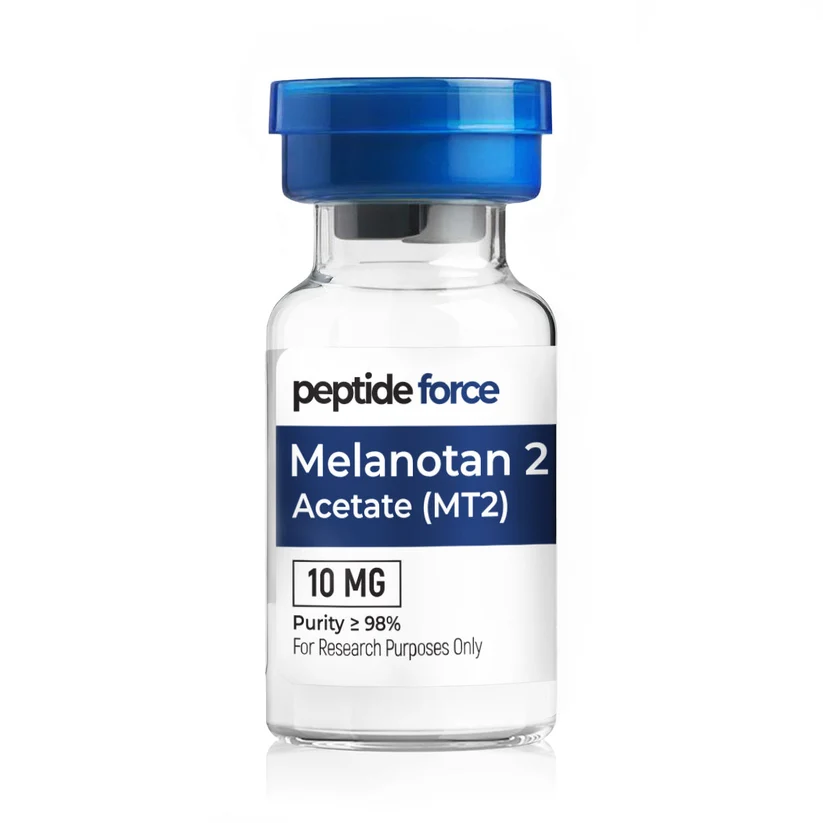
Melanotan II: Essential Safety Risks You Need to Know
What Is Melanotan II?
This synthetic peptide is known to affect the melanocortin pathway. This affects the body in many ways including affecting skin colouration. As it is linked to melanin – the pigment that affects our skin, hair and eye colour –, it has been of interest within the beauty industry.
Often ‘tanning peptide’ is mentioned in relation to Melanotan II. It is also available both in injectable and nasal spray formats. Nevertheless, whilst information is frequently available online relating to this peptide, this does not always equate to clinically proven or approved information.
An appreciation of the potential health implications, alongside quality and legality aspects, should therefore be undertaken when investigating this peptide.
How Does the Tanning Peptide Work?
Melanin is produced by specific cells known as melanocytes. This then influences skin colour and can also offer a degree of defence against UV light.
Melanocortin is part of a signalling system and is involved in numerous body functions, including those relating to colouration.
Whilst research can be conducted on synthetic materials and their interaction with the melanocortin pathway, this does not always demonstrate that they are safe and/or suitable for use within the beauty industry.
Furthermore, even if skin colour is altered (whether naturally or via external means) it is still essential to continue to protect the skin from UV light.
Potential Health Implications and Side-effects
As previously highlighted, safety is a key area to consider for unapproved tanning products.
There have been various reported side effects from products labelled as containing Melanotan II. These include:
Stomach upsets and sickness.
Headaches and redness of the skin on the face.
Altered appetite.
Alteration of moles and freckles.
Issues relating to internal organs.
Worrying skin related problems.
Whilst further research is required to fully assess the long-term safety of this peptide, reports of side effects do not necessarily conclusively show that each listed health issue was in fact directly attributable to the product.
Furthermore, the quality of products is often questionable in the case of online, non-licensed sales. Individuals may therefore lack confidence in being able to accurately ascertain what is contained within, and the quality of, a given product.
Poor product quality can consequently pose further health implications.
Is This Synthetic Peptide Licensed For Human Use?
Whereas research can be conducted on a material, this differs from it being licensed as a medicine.
Currently, the FDA in the US has not licensed Melanotan II either for tanning or for any other medical purpose.
Likewise, Australia’s Therapeutic Goods Administration has raised concerns regarding non-licensed melanotan tanning products and highlighted both their unlicensed status and potential health implications.
Legislations differ internationally and so it is advisable for both individuals and online businesses to check with the relevant country’s medicines authority to identify current licencing requirements.
Just because a product can be purchased online does not automatically mean that it is licenced, approved or even safe for Human Use.
Businesses must also ensure that the information given, together with sales methods, for their products are in line with relevant medicines and consumer legislation.
Skin Colour and Protection from UV Light
Skin colour is affected by a number of factors, such as genetic make-up, environment and hormonal messages.
Whilst a deeper skin colour may be seen as aesthetically favourable, it should never be viewed as a form of sufficient sun protection.
UV light can negatively affect skin and is linked to both early skin ageing and skin cancer. Again, this remains pertinent, even if an individual has darker skin.
Any alteration to moles, atypical skin colouration or new skin growths should be analysed by a suitably qualified professional.
Should individuals have skin-related concerns then they should discuss these with a professional rather than using unlicensed beauty products.
Safer Alternatives to Obtain a Tan
Those wishing to achieve a sun-kissed look have numerous licenced beauty options available to them, in preference to using unlicensed injectable tanning materials.
Common beauty tanning alternatives include:
Fake tan solutions – Beauty products which give the illusion of a tanned complexion.
Self tanning creams – Beauty items which darken skin, but which do not rely on peptides to achieve this.
Bronzers – Beauty products which can be washed off and temporarily alter skin appearance.
Spray tan – Beauty procedures which utilise beauty tanning solutions.

Reviews
There are no reviews yet.