
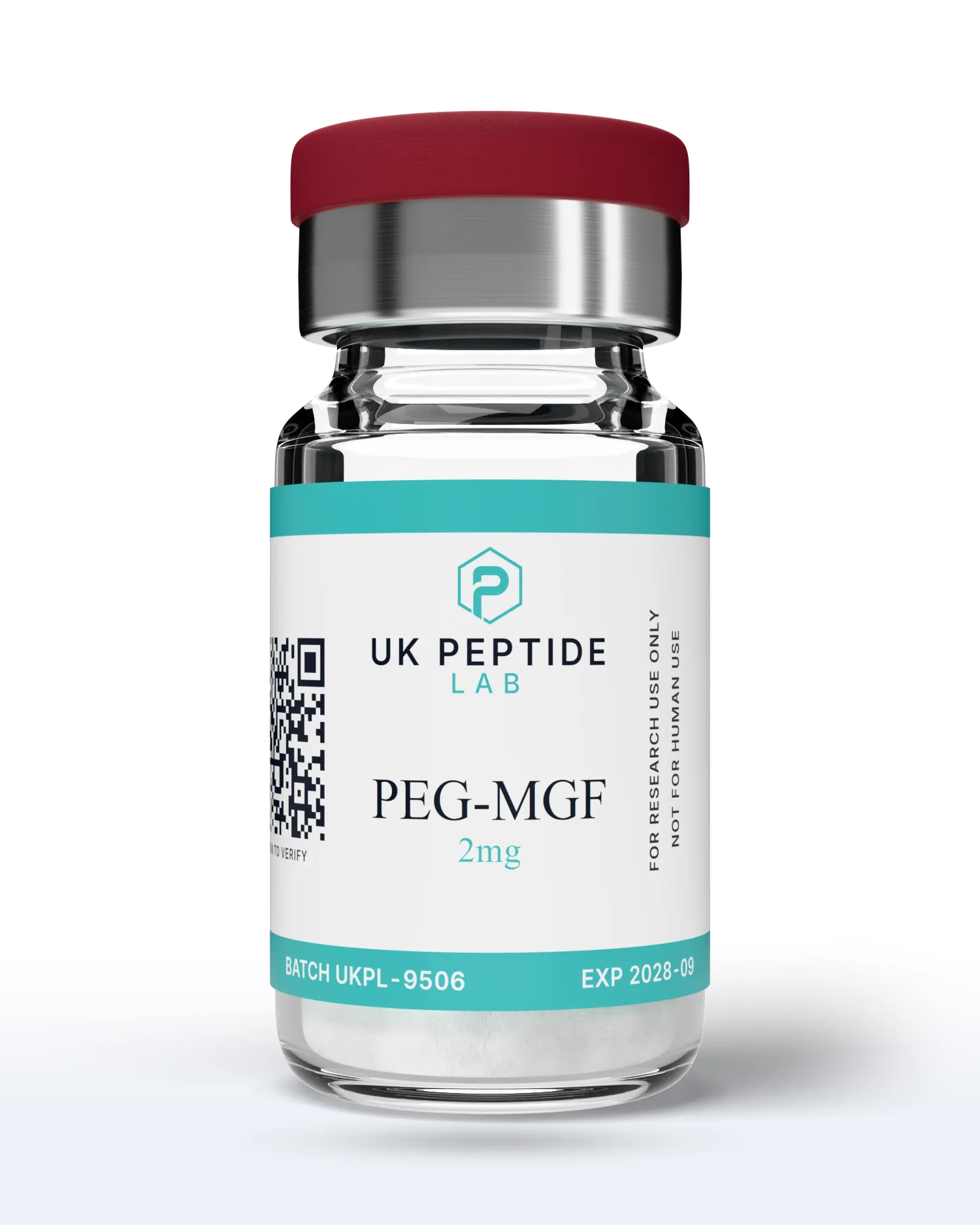
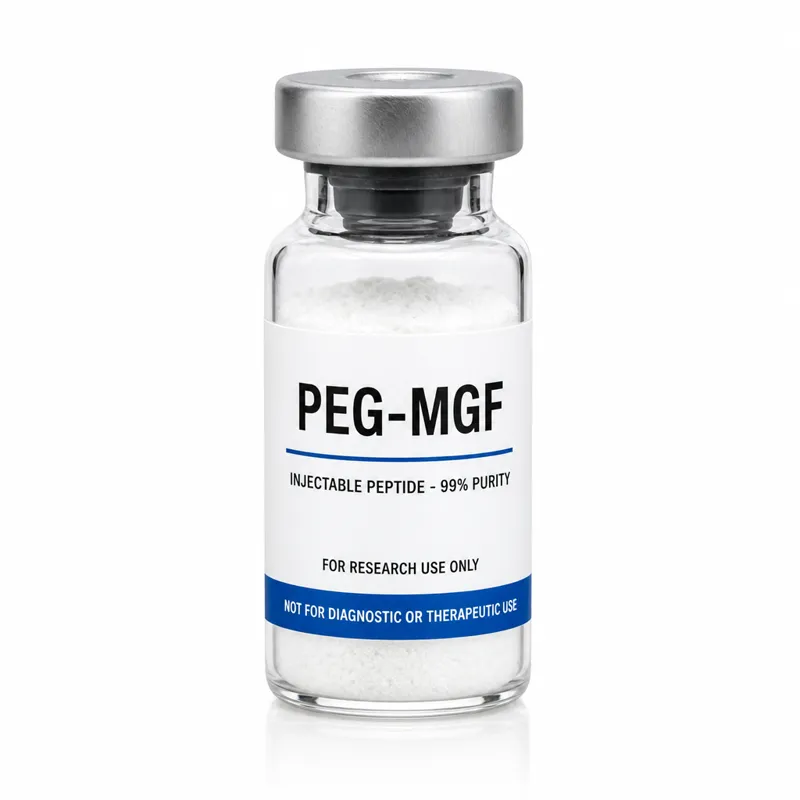
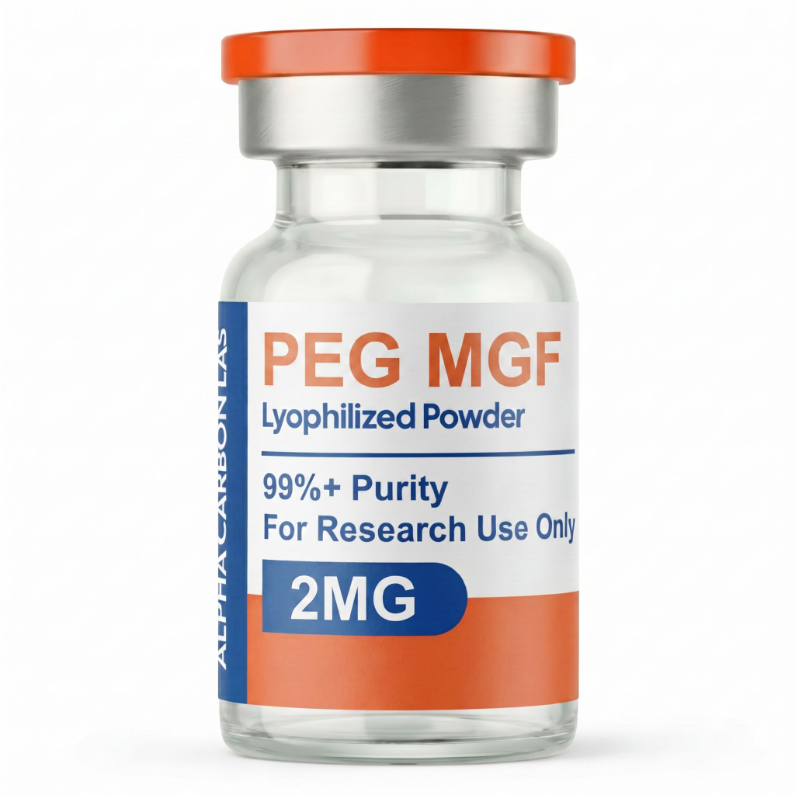
PEG-MGF (Pegylated Mechano Growth Factor) is an experimental peptide-related compound associated with research into insulin-like growth factor 1 (IGF-1) signalling, skeletal muscle biology, and cellular responses to mechanical stress.
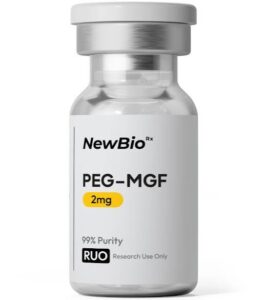
PEG MGF, offered at 2mg, is a high-quality specialised research peptide developed for advanced scientific exploration in biochemistry and related fields. This product is ideal for laboratory settings where precision and reliability are paramount.
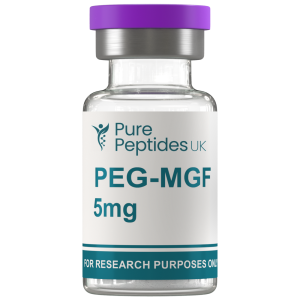
PEG-MGF (Pegylated Mechano Growth Factor) is an experimental peptide-related compound associated with research into insulin-like growth factor 1 (IGF-1) signalling, skeletal muscle biology, and cellular responses to mechanical stress.
PEG MGF is supplied as a lyophilised solid to ensure maximum stability and ease of use in research environments. For best results, follow our website’s detailed reconstitution and storage guidelines.
PEG MGF is meticulously synthesised through a controlled process that guarantees high purity (≥98%) and stability, making it suitable for precise scientific studies. Our commitment to excellence ensures that each batch undergoes stringent quality control to meet the rigorous standards researchers require.
PEG-MGF (Pegylated Mechano Growth Factor) is an experimental peptide-related compound associated with research into insulin-like growth factor 1 (IGF-1) signalling, skeletal muscle biology, and cellular responses to mechanical stress.
PEG-MGF combines the concept of mechano growth factor (MGF) with polyethylene glycol (PEG), a polymer used in pharmaceutical science to modify the properties of certain molecules. PEGylation is intended to influence a molecule’s stability, distribution, and clearance. However, the pharmacological properties and clinical performance of PEG-MGF itself have not been adequately established.
Interest in PEG-MGF stems from the wider scientific investigation of growth-factor signalling and its involvement in cellular growth, differentiation, and tissue maintenance. These processes are important areas of biomedical research, particularly in studies examining muscle physiology and responses to physical stress.
PEG-MGF is an experimental research compound rather than an established therapeutic product. Its potential applications should therefore be discussed in the context of scientific investigation, not as proven medical benefits or guaranteed improvements in physical performance.
Mechano growth factor is associated with a splice variant of the gene that encodes insulin-like growth factor 1. IGF-1 is a naturally occurring protein involved in several physiological processes, including growth, cellular metabolism, and tissue development.
Different IGF-1 transcripts and protein-related products have been investigated to understand how cells respond to changing physiological conditions. Research into MGF has particularly focused on skeletal muscle, where mechanical loading and tissue stress can influence the expression of growth-related signalling molecules.
These findings have generated scientific interest in the possibility that different components of the IGF-1 system may contribute differently to cellular responses. Nevertheless, the precise biological activity attributed to synthetic MGF peptides remains incompletely characterised, and some proposed effects have not been consistently reproduced.
It is important to distinguish the naturally occurring IGF-1 system, synthetic MGF peptides, PEG-MGF, and approved IGF-1 medicines. They are not interchangeable substances, and evidence supporting one cannot automatically be used to establish the effectiveness or safety of another.
PEGylation refers to the attachment of polyethylene glycol chains to a biological molecule, such as a peptide or protein. In pharmaceutical development, this technique can change a molecule’s physical and pharmacokinetic properties.
Depending on the molecule and the specific PEG modification, PEGylation may influence susceptibility to enzymatic degradation, renal clearance, distribution within the body, and interactions with biological systems.
The purpose of PEGylation in a proposed peptide product is often to investigate whether modifying the molecule can change how long it remains available in a biological environment.
For PEG-MGF, however, the expected advantages of PEGylation should not be confused with experimentally demonstrated benefits. Robust comparative pharmacokinetic studies establishing its duration of activity, biological availability, and safety have not been identified.
The exact characteristics of a PEGylated compound depend on factors such as polymer size, attachment site, molecular structure, purity, and manufacturing consistency. These factors are relevant to the interpretation of research results and the evaluation of material supplied for laboratory investigation.
Skeletal muscle is a dynamic tissue that continually responds to physical activity, mechanical loading, nutrition, and recovery. Muscle cells and their associated progenitor cells participate in processes that maintain tissue structure and respond to certain forms of damage.
Growth-factor signalling is one of several biological systems studied in relation to these processes. Researchers investigate how signalling pathways influence cell proliferation, differentiation, protein synthesis, and interactions between muscle cells and their surrounding environment.
MGF has attracted interest because of its proposed relationship with the response of muscle tissue to mechanical stress. Laboratory studies have examined whether MGF-related peptides influence muscle-cell behaviour under controlled experimental conditions.
These studies provide a scientific rationale for further investigation, but biological plausibility does not establish that administering a synthetic peptide will produce meaningful changes in muscle mass, strength, exercise performance, or recovery in humans. For PEG-MGF specifically, the evidence remains insufficient to establish a reproducible therapeutic or performance-enhancing effect.
The following areas describe research questions associated with MGF biology and related growth-factor
pathways. They are not established health benefits of PEG-MGF.
Muscle-cell proliferation
One research question concerns whether MGF-related signalling influences the proliferation of muscle precursor cells. These cells are involved in muscle maintenance and adaptation.
Some early experimental findings suggested that synthetic MGF-derived peptides might influence the behaviour of myogenic cells. However, subsequent research has challenged aspects of these findings, including reports that failed to reproduce anticipated effects on proliferation and differentiation. Consequently, PEG-MGF cannot currently be promoted as a clinically proven muscle-building agent.
Muscle differentiation and tissue maintenance
Muscle differentiation involves the development of precursor cells into specialised muscle cells. This process is regulated by multiple molecular pathways and is important to muscle development and maintenance.
Researchers have explored whether different IGF-1-related products have distinct effects on this process.
The underlying biology remains an area of investigation, with results depending on the molecular form studied and the experimental model used. There is insufficient evidence to conclude that PEG-MGF improves muscle differentiation or tissue maintenance in people.
Responses to mechanical stress
Mechanical loading during exercise influences numerous signalling processes within skeletal muscle. Understanding these responses may help researchers investigate the biology of exercise adaptation and muscle remodelling.
MGF expression has been studied in experimental models involving mechanical loading and muscle damage. These observations have contributed to interest in the role of IGF-1 splice variants. However, the body’s natural response to mechanical stress does not demonstrate that an externally administered PEG-MGF product reproduces the same process or provides additional benefits.
Tissue repair research
Cellular repair involves inflammation, cell migration, tissue remodelling, extracellular-matrix regulation, and multiple growth-factor pathways. These processes vary substantially between tissues and types of injury.
Some preclinical investigations of MGF-derived peptides have explored biological effects relevant to tissue protection and repair.
Such studies may provide hypotheses for future research, but they do not establish PEG-MGF as a treatment for muscle injuries, tendon injuries, joint conditions, or surgical recovery. The distinction between an experimental biological signal and a clinically useful treatment is essential. A treatment must demonstrate appropriate safety, efficacy, and consistency in relevant clinical studies before therapeutic claims can be justified.
Broader growth-factor signalling
The IGF-1 system is involved in cell growth, metabolism, and tissue development. Its activity is regulated through receptors, binding proteins, intracellular signalling pathways, and interactions with other hormonal systems. Research into related peptides may contribute to a broader understanding of these biological mechanisms.
Nevertheless, the effects of a particular compound cannot be predicted solely from its association with a naturally occurring growth-factor pathway. PEG-MGF has not been established as an effective intervention for improving general health, reversing ageing, increasing longevity, or treating metabolic disorders.
A scientifically responsible product description must separate potential research applications from demonstrated health outcomes.
At present, there is no adequate human clinical evidence establishing that PEG-MGF provides any of the following benefits:
These outcomes should not be presented as established benefits in promotional material.
The broader biology of IGF-1 and MGF may justify continued scientific investigation, but the existence of a plausible biological mechanism is not proof of a meaningful clinical effect.
For prospective research applications, the central questions remain whether PEG-MGF has reproducible biological activity, whether that activity translates into useful outcomes, what exposure is required, and whether any potential benefit outweighs the associated risks.
The reliability of peptide research depends on the quality and characterisation of the material being investigated. A product name alone does not establish its molecular identity, purity, stability, or suitability for a particular experiment
A responsible research-product specification should provide appropriate information about:
A certificate of analysis should be interpreted according to the methods actually performed. A stated purity percentage alone does not prove identity, sterility, absence of endotoxins, clinical safety, or suitability for human administration. Because PEGylated products can differ in their polymer characteristics and molecular composition, detailed characterisation is particularly relevant when comparing research materials from different sources.
PEG-MGF has not been adequately evaluated in controlled human clinical studies. Its human pharmacokinetics, appropriate exposure levels, adverse-effect profile, long-term effects, and interactions with medicines are not established.
This absence of evidence makes it impossible to describe the compound as safe for human use or to provide a reliable assessment of its benefit-to-risk ratio. The growth-factor pathways associated with MGF are involved in cellular growth and signalling. This raises scientific questions about unintended biological effects, particularly if a compound changes growth-related signalling beyond its intended experimental context.
Concerns involving abnormal tissue growth or tumour biology are theoretical considerations associated with aspects of growth-factor signalling; they should not be presented as proven specific adverse effects of PEG-MGF. Equally, the absence of established adverse effects must not be interpreted as evidence of safety.
Other uncertainties include possible immune responses, effects related to the PEG modification, metabolic consequences, product impurities, and variation between formulations. The likelihood and severity of these risks have not been adequately quantified for PEG-MGF. It should not be used for self-treatment, bodybuilding, injury management, or other medical purposes outside an appropriate authorised research or clinical framework.
PEG-MGF should not be represented as an approved medicine for muscle growth, injury recovery, or general health improvement.
Its regulatory status depends on the jurisdiction and the intended activity, including manufacture, supply, research, and human use. Organisations considering the purchase or distribution of research peptides should verify applicable medicines legislation, import requirements, laboratory safety rules, and supplier obligations.
Competitive athletes should also be aware that mechano growth factors are covered by the World Anti-Doping Agency’s prohibited-substance framework. Athletes subject to anti-doping rules should consult the applicable current Prohibited List and their governing body before considering any product that may contain a prohibited substance.
A research-use designation does not automatically establish that a product may lawfully be supplied for every purpose, nor does it make the product suitable for administration to people.
The most appropriate positioning for PEG-MGF is as an experimental compound relevant to research into peptide chemistry, growth-factor biology, and the molecular responses associated with mechanical stress.
Marketing communications should focus on verifiable product characteristics, analytical documentation, intended research context, and transparent descriptions of the evidence.
Claims that PEG-MGF guarantees muscle hypertrophy, accelerates injury healing, improves athletic performance, reverses ageing, or produces specific health outcomes should be avoided unless supported by appropriate evidence and permitted under applicable law.
Likewise, descriptions such as “clinically proven,” “medically approved,” “risk-free,” or “guaranteed recovery” should not be used without substantiation. A credible research-product presentation can explain why scientists are interested in the compound while openly acknowledging uncertainty. This approach helps readers distinguish scientific hypotheses from demonstrated results and makes the product description more informative and defensible.
PEG-MGF combines the concept of mechano growth factor (MGF) with polyethylene glycol (PEG), a polymer used in pharmaceutical science to modify the properties of certain molecules. PEGylation is intended to influence a molecule’s stability, distribution, and clearance. However, the pharmacological properties and clinical performance of PEG-MGF itself have not been adequately established.
What is PEG-MGF?
PEG-MGF is the name used for a PEGylated form of mechano growth factor, a peptide-related entity associated with the IGF-1 system. Its specific pharmacological properties remain inadequately characterised.
Is PEG-MGF proven to build muscle?
No. There is insufficient human clinical evidence to establish that PEG-MGF increases muscle mass or strength.
Can PEG-MGF improve recovery after exercise?
This has not been established in controlled human studies. Research into the body’s natural growth-factor responses cannot be taken as proof of a recovery benefit from the experimental compound.
Does PEGylation make the peptide more effective?
PEGylation can alter the properties of certain molecules, but it does not automatically make a compound more effective. The pharmacokinetic and therapeutic advantages of PEG-MGF have not been adequately demonstrated.
Is PEG-MGF a treatment for injuries?
No established clinical indication supports its use as a treatment for muscle, tendon, ligament, or joint injuries.
Is PEG-MGF safe for human use?
Its safety in humans has not been established. There is insufficient evidence to recommend it for self-administration or medical treatment.
What information should accompany a research product?
Relevant documentation may include identity testing, analytical purity results, batch traceability, manufacturing information, and appropriately validated storage and stability data.
PEG-MGF occupies an experimental area of peptide and growth-factor research. Interest in the compound arises from questions about the biology of IGF-1 splice variants, muscle-cell responses, mechanical stress, and the possible effects of PEGylation on peptide properties.
These topics are scientifically relevant, but they do not establish PEG-MGF as a proven health intervention. Evidence supporting the compound’s specific biological activity is limited, and reliable human data on effectiveness, pharmacokinetics, and safety are lacking.
The most credible product description is therefore one that communicates its experimental status, explains the scientific rationale for investigating related pathways, and provides transparent information about product characterisation and research limitations.
PEG-MGF combines the concept of mechano growth factor (MGF) with polyethylene glycol (PEG), a polymer used in pharmaceutical science to modify the properties of certain molecules. PEGylation is intended to influence a molecule’s stability, distribution, and clearance. However, the pharmacological properties and clinical performance of PEG-MGF itself have not been adequately established.
| Dosage | 2mg, 5mg |
|---|---|
| Quantity | 1, 2, 5, 10 |
Only logged in customers who have purchased this product may leave a review.

Reviews
There are no reviews yet.