
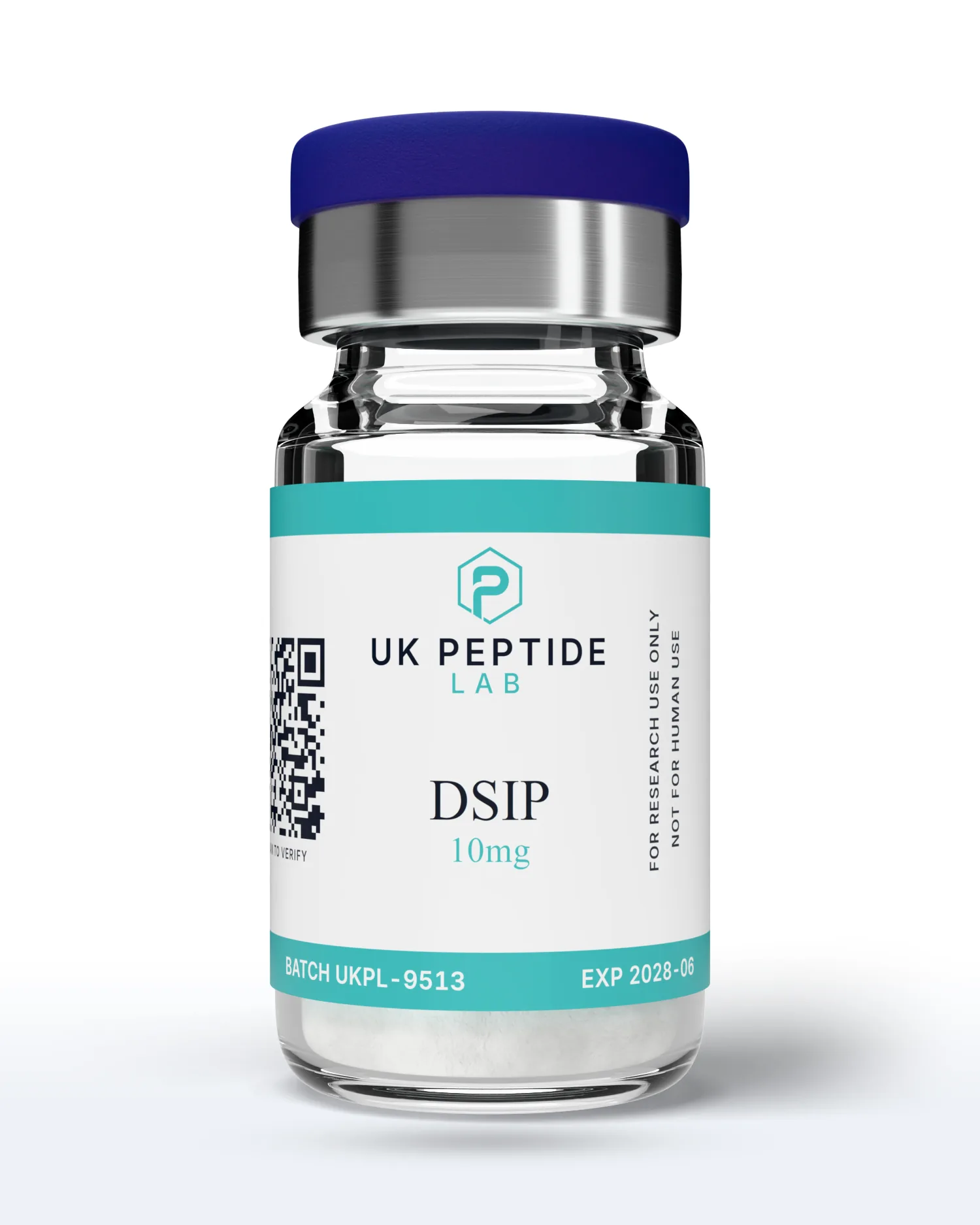
DSIP Peptide is a research compound historically associated with investigations into sleep-related physiology and neurobiological processes. Its nine-amino-acid structure and scientific history have made it a subject of interest in discussions about peptide research.
DSIP Peptide, or Delta sleep-inducing peptide, is a naturally-occurring peptide made of nine amino acids, isolated from the central nervous system of experimental models of electrically induced sleep. DSIP Peptide is posited to regulate the sleep cycle, as suggested by its name, but may also play a role in regulating various physiological processes. Suggested to induce delta sleep in test models, this neuropeptide also appears to impact electrophysiological activity and possibly regulate the neurotransmitter levels in the brain.
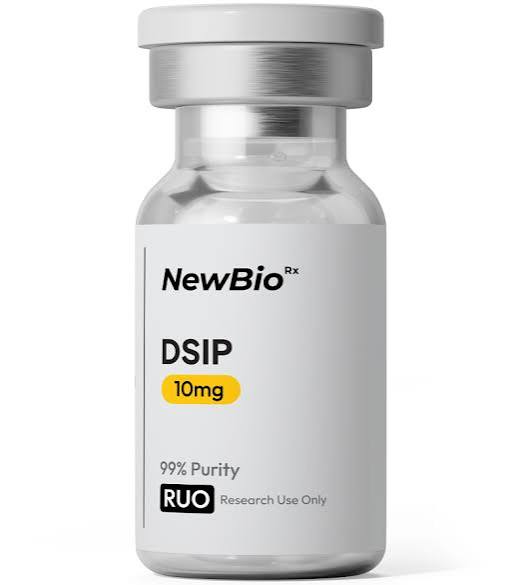
DSIP peptide was first characterized and examined from 1963 to 1977 and has since been widely studied by scientists.(2) Initially regarded only for its potential as a sleep-including factor, DSIP Peptide was soon suggested to induce other potential actions, such as mitigating pain, sleep cycle regulation, and mitigating withdrawal.
Product Name: DSIP Peptide
Full Name: Delta Sleep-Inducing Peptide
Product Category: Research Peptide
Molecular Classification: Nonapeptide
Amino Acid Length: Nine amino acid residues
Primary Research Interest: Sleep physiology, neurobiology, stress-related pathways, and biological signaling
Product Presentation: As specified by the manufacturer
Quality Documentation: Batch-specific Certificate of Analysis, where available
Intended Use: Scientific research and laboratory investigation, unless separately authorized for another purpose.
DSIP Peptide, short for Delta Sleep-Inducing Peptide, is a small peptide that has attracted scientific interest because of its proposed relationship with sleep regulation and neurophysiological processes. Its historical association with sleep research has made it a subject of investigation in studies examining the interactions between neuroactive compounds and the biological systems involved in rest, stress responses, and physiological regulation.
As interest in peptide research continues to grow, DSIP Peptide is encountered in specialist research catalogues and biotechnology supply discussions. Its commercial relevance is associated primarily with its identity as a research compound and the scientific questions surrounding its biological activity.
DSIP Peptide is composed of nine amino acid residues. The commonly reported sequence is Trp-Ala-Gly-Gly-Asp-Ala-Ser-Gly-Glu. Its short sequence makes it structurally distinct from larger proteins and provides a defined chemical identity for product characterization.
For commercial buyers, product quality should be established through accurate identification, reliable analytical testing, transparent documentation, and appropriate packaging. A product marketed as DSIP Peptide should have a clearly defined specification that distinguishes it from other peptides and related research compounds.
This description presents DSIP Peptide as a specialized research product. Although it is frequently discussed in connection with sleep and stress, its proposed health applications remain investigational. It should not be advertised as a proven sleep treatment, an established anti-anxiety product, or a clinically validated wellness supplement.
DSIP Peptide was described in early research involving sleep-associated observations in animals. Subsequent investigations explored whether the peptide could influence sleep patterns, neurophysiological activity, and other biological responses.
The term “sleep-inducing” reflects the hypothesis that originally motivated research into the compound. It should not be interpreted as a guarantee that the peptide induces sleep in humans. Historical studies have reported inconsistent results, and the mechanism responsible for its proposed effects remains insufficiently established.
Unlike many well-characterized peptide hormones, DSIP Peptide does not have a universally established receptor-mediated mechanism that explains its proposed biological effects. Its identity, biological significance, and precise physiological role have remained subjects of scientific discussion.
These uncertainties do not remove its value as a subject for investigation. Instead, they define the questions that research must address before firm conclusions can be drawn. For laboratories studying neuroactive compounds, DSIP Peptide provides a research subject through which questions about peptide signaling, sleep-associated processes, and experimental reproducibility may be examined. Commercially, a scientifically responsible product description should make this distinction clear: a compound can be of research interest without having established therapeutic effectiveness.
DSIP Peptide is a nonapeptide, meaning that it consists of nine amino acid residues linked together in a defined sequence.
The identity of a research peptide is determined by more than its commercial name. Its sequence, molecular form, chemical integrity, purity, and formulation all contribute to the product’s specification.
A supplier should confirm that the material corresponds to the intended DSIP Peptide sequence and disclose relevant formulation details. Where appropriate, product documentation should identify the molecular form, nominal quantity, and any additional substances present in the preparation.
DSIP Peptide research products may be presented in different physical forms depending on the manufacturer. Some synthetic peptide products are supplied as lyophilized powders, while other preparations may have different documented formats. The actual presentation must be verified against the specific product listing. A vial’s stated mass should not automatically be interpreted as the exact mass of chemically pure peptide. Formulation components, water content, counterions, and other characteristics can affect the relationship between the total material and the peptide content.
A professional supplier should provide clear information about these characteristics rather than relying on general marketing terminology. The product label should identify the product name, batch or lot number, stated quantity, supplier, storage requirements, and intended-use designation. This information supports inventory control and helps research teams maintain accurate records.
DSIP Peptide is commonly promoted online in association with sleep quality, relaxation, stress management, and recovery. However, these marketing themes must be distinguished from demonstrated clinical benefits.
Historical human research exists, but the studies are limited and inconsistent. Current evidence does not establish that DSIP Peptide reliably improves sleep or treats a medical condition. The following sections describe the scientific questions associated with the peptide rather than promising health outcomes.
Sleep Regulation Research
Sleep is a complex biological process involving interactions between the brain, circadian rhythms, neurotransmitters, hormonal signaling, and environmental influences.
DSIP became associated with sleep research because early investigations suggested that it might influence certain sleep-related measurements. Researchers subsequently explored its possible relationship with sleep architecture and neurophysiological activity.
This history explains why sleep regulation remains the most prominent research topic associated with DSIP.
However, sleep is not a single measurable outcome. Studies may examine the time required to fall asleep, total sleep duration, the frequency of awakenings, sleep stages, or subjective assessments of restfulness. A change in one measurement does not automatically demonstrate an improvement in overall sleep quality.
The available historical studies have not produced sufficiently consistent findings to establish DSIP as an effective sleep intervention.
Commercial positioning: DSIP may be described as a peptide of historical interest in sleep physiology research. It should not be advertised as a proven method for falling asleep faster, extending deep sleep, or treating insomnia.
Stress-Related Research
Stress responses involve several interconnected biological systems, including the nervous system, endocrine signaling, and behavioral responses to environmental demands. Some historical investigations have examined DSIP Peptide in contexts associated with stress-related physiology. These investigations have contributed to continued interest in the compound’s possible neurobiological effects.
Nevertheless, the evidence is insufficient to conclude that DSIP reduces everyday stress, treats anxiety, or produces reliable improvements in emotional well-being. Stress is also a broad concept that includes psychological experiences and measurable physiological responses. Evidence relating to one outcome cannot automatically be extended to another.
For commercial purposes, stress-related research can be included as an area of scientific interest, provided the language does not imply that the product is an established calming agent or treatment for anxiety disorders.
Commercial positioning: DSIP Peptide is a research compound associated with historical investigations into sleep and stress-related biological processes. Its clinical relevance remains uncertain.
Neurophysiology and Brain Signaling
Neurophysiology examines the electrical, chemical, and molecular processes through which the nervous system functions.
Peptides can participate in biological communication, and their interactions with nervous-system pathways are an important subject in neuroscience. DSIP Peptide has been investigated in the context of neurophysiological responses, although its precise mechanism of action remains unresolved.
Research in this area may help investigators formulate questions about the relationship between peptide chemistry and measurable biological responses. It is important, however, to avoid equating a proposed neurophysiological effect with a demonstrated improvement in memory, concentration, mood, or cognitive performance.
There is insufficient evidence to market DSIP Peptide as a cognitive enhancer or as a proven treatment for neurological disorders.
Commercial positioning: DSIP Peptide is relevant to exploratory research into neuroactive peptides and sleep-associated neurophysiological processes.
Recovery and Rest-Related Research
Adequate sleep and rest are associated with many aspects of normal physiological function. This relationship has encouraged interest in compounds that might influence sleep-related pathways. Some commercial discussions connect DSIP with physical recovery, post-exercise rest, or improved daytime functioning. These are claims that require direct scientific testing.
A proposed effect on a sleep-related laboratory measurement does not establish improved muscle recovery, reduced fatigue, enhanced athletic performance, or faster recovery from illness.
Reliable evidence supporting these specific outcomes is lacking.
Commercial positioning: DSIP Peptide may be included in research catalogues covering sleep physiology and neurobiology, but it should not be promoted as a validated recovery aid or sports-performance product.
Circadian and Biological Rhythm Research
Circadian rhythms are internal biological timing systems that help coordinate sleep and wakefulness, hormone release, body temperature, and other processes over approximately 24-hour cycles.
The relationship between biological timing and sleep provides a broader scientific context for research into sleep-associated compounds.
DSIP Peptide may be considered within exploratory discussions of sleep-related physiology, but its role in human circadian regulation has not been established. It would therefore be inaccurate to claim that DSIP resets the biological clock, corrects jet lag, or reliably normalizes sleep schedules.
Commercial positioning: Circadian biology and sleep regulation provide relevant background for understanding the wider research context, rather than established indications for DSIP.
General Wellness and Quality of Life
Sleep, emotional well-being, energy, and daily functioning are interconnected aspects of human health. These relationships have helped generate consumer interest in products marketed around sleep and relaxation.
Nevertheless, consumer interest is not evidence of effectiveness.
There is currently insufficient reliable evidence to establish that DSIP improves overall wellness, increases daily energy, reduces fatigue, enhances mood, or improves quality of life in humans. A responsible supplier should not present testimonials, informal reports, or theoretical mechanisms as proof of these benefits.
For a research-focused brand, the strongest approach is to communicate the scientific background accurately and allow the evidence to determine which claims may eventually be justified.
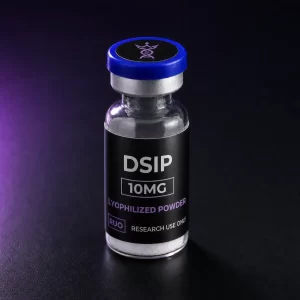
Product quality is a major consideration in the procurement of synthetic research peptides.
A clear commercial specification should identify the peptide and describe the methods used to evaluate its identity and purity. These details help purchasers compare products and determine whether the available documentation meets their research requirements.
Several analytical approaches may be relevant.
Additional Quality Assessments: Depending on the intended application, other tests may be appropriate, including water-content determination, residual-solvent analysis, or microbiological assessments.
These measurements address different aspects of quality. A high HPLC purity percentage alone does not demonstrate sterility, endotoxin control, clinical safety, or therapeutic effectiveness. Suppliers should only advertise characteristics that are supported by suitable evidence. Terms such as “pharmaceutical grade,” “sterile,” and “clinically proven” should not be used without appropriate justification.
Synthetic research peptides are generally produced through controlled manufacturing processes involving peptide synthesis, purification, analytical testing, and preparation for distribution. For DSIP Peptide, the process begins with a defined target sequence and product specification. The manufacturer establishes the required identity and quality criteria before the material is released for sale.
Following synthesis, the material may undergo purification to reduce unwanted synthesis-related components and other impurities. Analytical testing is then used to assess whether the product meets the applicable release requirements.
Quality management may include documented manufacturing procedures, equipment controls, supplier qualification, batch records, personnel training, and traceability systems.
The finished material is prepared for packaging according to its documented characteristics and stability requirements.
The precise manufacturing method, purification process, and testing programme vary between suppliers. A commercial description should not claim a particular production technology or manufacturing standard unless the supplier can verify it.
For customers, the most useful evidence is a clear product specification supported by batch-specific testing and reliable quality documentation. A professional supplier should also maintain procedures for investigating quality concerns and managing products that do not meet established specifications.
Packaging forms an important part of the overall commercial product offering.
A suitable container should be selected according to the material’s physical characteristics, formulation, and storage requirements. The external packaging should protect the product during ordinary handling and distribution.
Each DSIP Peptide vial or container should be clearly identified and linked to a traceable batch record. The label should provide the product name, quantity, lot number, and relevant storage instructions.
The supplier should disclose the actual package size and avoid implying that all DSIP products have the same concentration, formulation, or presentation.
Where additional documentation is available, it should be easy for purchasers to obtain the relevant product specification and batch-specific analytical report. Clear packaging and accurate labelling support procurement, inventory management, and scientific recordkeeping.
Like other peptide materials, DSIP Peptide may be affected by environmental conditions. Its stability depends on the specific formulation, water content, temperature, packaging, and other relevant factors.
Storage requirements should therefore be based on the manufacturer’s product-specific instructions rather than on general assumptions about peptides.
The supplier should provide the recommended storage conditions and any relevant handling precautions. Where shelf-life claims are made, they should be supported by appropriate stability information.
Additional considerations may apply after a container is opened or a preparation is made. The stability of a prepared solution should not be assumed to be identical to that of the original unopened product. Research laboratories should follow the manufacturer’s instructions and their own relevant quality procedures. For commercial suppliers, transparent storage guidance is an important part of customer service and responsible product management.
DSIP Peptide is an investigational research peptide rather than an established consumer treatment. Its historical investigation does not establish that it is safe or effective for self-administration. The available evidence does not adequately characterize its long-term safety, interactions with medicines, or potential adverse effects when used outside controlled research settings.
Products supplied for research may not meet the manufacturing, sterility, formulation, or quality requirements necessary for administration to humans.
A research-use designation should not be interpreted as permission for human consumption or injection.
Commercial sellers should avoid claiming that DSIP Peptide treats insomnia, anxiety, depression, chronic fatigue, or other medical conditions unless the relevant product has the necessary evidence and regulatory authorization.
They should also avoid recommending unverified combinations with other peptides, medicines, supplements, or performance-enhancing substances.
Customers considering a health intervention should seek guidance from an appropriately qualified healthcare professional. Researchers should follow applicable laboratory safety procedures and institutional requirements.
Responsible marketing protects customers and supports the credibility of a research-focused brand.
The regulatory status of DSIP depends on the country, product formulation, intended use, and manner of marketing.
A substance offered as a laboratory research reagent may be treated differently from a product promoted for the prevention, diagnosis, or treatment of disease. The legal classification cannot be determined solely by placing a “research use only” statement on a label. Marketing claims, product presentation, intended use, and applicable legislation may all be relevant.
Before commercial distribution, a supplier should establish which requirements apply in the destination market.
These may include rules governing medicinal products, importation, product labelling, consumer protection, advertising, customs declarations, and the supply of chemical or biological research materials.
For UK sales, businesses should check the relevant Medicines and Healthcare products Regulatory Agency requirements and other applicable legislation before making medicinal claims. For international sales, the supplier and purchaser should establish their respective responsibilities for compliance and documentation.
What is DSIP Peptide?DSIP, or Delta Sleep-Inducing Peptide, is a nine-amino-acid peptide investigated historically in connection with sleep-associated biological processes.
What are the potential health benefits of DSIP Peptide?
Sleep regulation and stress-related physiology are the main themes associated with DSIP research. However, evidence is insufficient to establish reliable clinical benefits for sleep, anxiety, recovery, or general wellness.
Does DSIP Peptide improve deep sleep?
It has been investigated in relation to sleep-related measurements, but the available evidence does not establish that it reliably improves deep sleep in humans.
Is DSIP Peptide a proven treatment for insomnia?
No. It is not an established, clinically validated insomnia treatment.
Is DSIP safe for human use?
Its safety has not been adequately established for general human use. Research-grade products should not be assumed to be suitable for human administration.
How is product quality assessed?
Quality assessment may include peptide identity testing, HPLC, mass spectrometry, and other relevant analytical procedures. The available documentation should be reviewed for the specific batch.
Does a high purity percentage prove effectiveness?
No. Purity is an analytical characteristic and does not establish clinical effectiveness or safety.
What information should be provided with a commercial vial?
The label should identify the product, quantity, batch number, supplier, and relevant storage information. Supporting documentation may include a product specification and Certificate of Analysis.
DSIP occupies a specialized position in the research peptide market because of its historical association with sleep physiology and its continuing relevance to questions about neuroactive compounds. For research-oriented buyers, a high-quality commercial offering should provide transparent information about the material’s identity, composition, purity, and documented quality attributes.
A supplier can strengthen its offering through accurate labelling, reliable batch traceability, appropriate packaging, responsive service, and accessible technical documentation.
These features provide practical value to laboratories and procurement teams by helping them evaluate materials against defined requirements.
Commercial credibility is especially important for an investigational peptide. Overstating potential health benefits can mislead customers and undermine confidence in the supplier. A professional brand should therefore focus on evidence-based communication, product transparency, and responsible supply practices.
DSIP Peptide is a research compound historically associated with investigations into sleep-related physiology and neurobiological processes. Its nine-amino-acid structure and scientific history have made it a subject of interest in discussions about peptide research.
Although it is frequently promoted in connection with sleep, relaxation, stress management, and recovery, the available evidence does not establish these outcomes as reliable clinical benefits. For commercial buyers, the most meaningful indicators of product quality are accurate identity, appropriate analytical testing, batch traceability, transparent specifications, and scientifically supported storage instructions.
A responsible DSIP Peptide product description should communicate its research background without implying that it is a proven medicine or wellness treatment. DSIP Peptide (Delta Sleep-Inducing Peptide) is a specialized research peptide intended for appropriate scientific investigation. Its principal research context concerns sleep-associated physiology and neurobiological processes.
Product identity, purity, quantity, formulation, analytical documentation, and storage requirements should be confirmed against the manufacturer’s current specifications before purchase. The product should not be represented as a proven treatment for insomnia, anxiety, stress, fatigue, or any other medical condition without adequate evidence and the required regulatory authorization.
| Choose | 10mg Vial, 10mg-10ml Nasal Spray |
|---|---|
| Quantity | 1, 2, 5, 10 |
Only logged in customers who have purchased this product may leave a review.

Reviews
There are no reviews yet.