

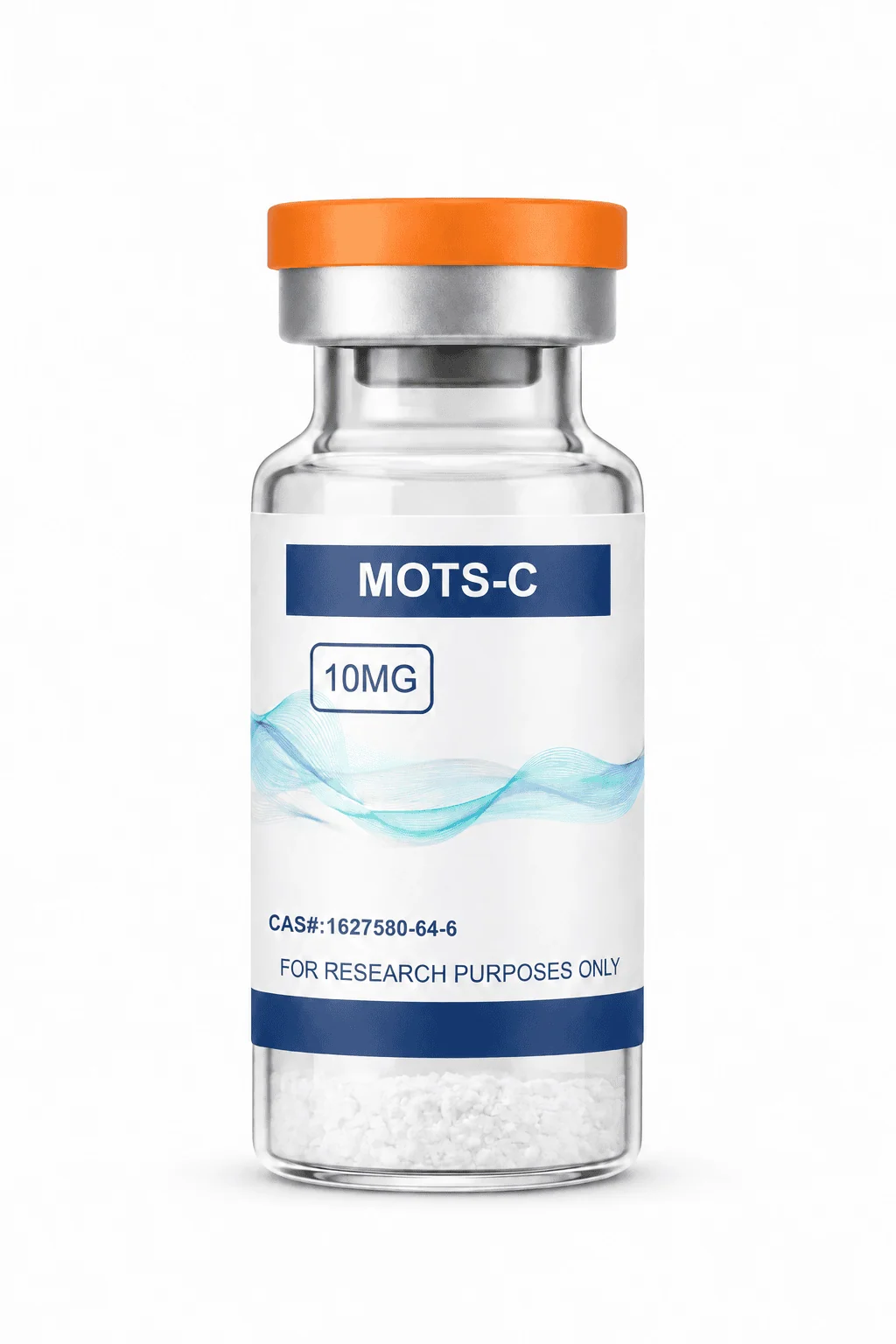
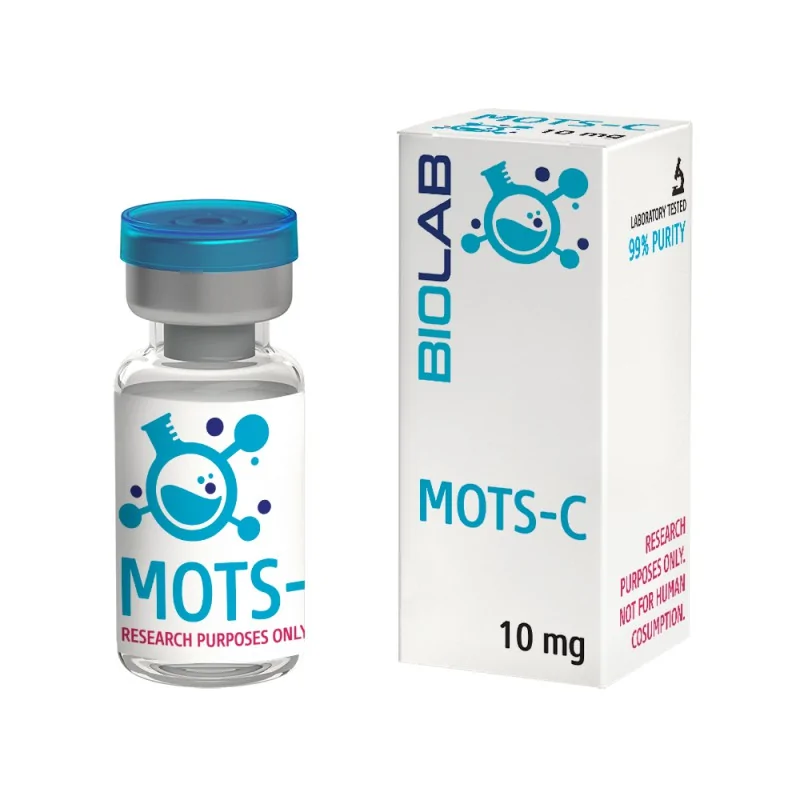
MOTS C Peptide is a metabolic regulator that operates through a unique pathway independent of energy stress. It induces cellular and systemic glucose uptake and improves insulin sensitivity, and has been shown to prevent diet-induced obesity (DIO) in mice.
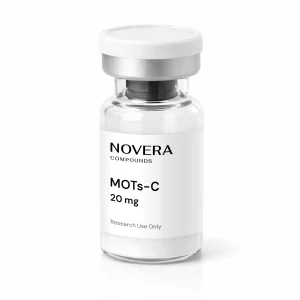
MOTS C Peptide is a 16 amino acid mitochondrial-derived peptide encoded within the mitochondrial 12S rRNA region. Research has studied its role in metabolic regulation, including AMPK pathway activation and effects on glucose and fatty acid metabolism. As one of the first characterised mitochondrial-derived peptides, it has become a reference compound in metabolic and mitochondrial research. Lyophilised powder, third-party tested.
Mitochondrial ORF of the 12S rRNA Type-C (MOTS-c) is a mitochondrial-derived peptide composed of 16 amino acids, encoded by the 12S rRNA region of the mitochondrial genome. As one of the newly discovered short open reading frame (sORF)-encoded peptides, MOTS-c represents a paradigm-shifting concept in cellular biology: the mitochondrial genome, once thought to be primarily responsible for energy production through oxidative phosphorylation, actually encodes functional peptides with systemic biological activity.
The MOTS C Peptide protein is transferred to the nucleus during metabolic stress and directs the expression of nuclear genes to promote cell balance. Different tissues co-express the protein with mitochondria, and plasma also contains the protein, but its level decreases with age.
The discovery of MOTS C Peptide in 2015 by Lee, Kim, Cohen, and colleagues at the University of Southern California marked a significant advancement in understanding mitochondrial-nuclear communication.
The 16-amino-acid peptide belongs to a broader family of mitochondrial-derived peptides (MDPs) that also includes humanin and the small humanin-like peptides (SHLPs 1 through 6). These mitochondrial-derived peptides may answer key biological problems that have plagued the field for decades, including mitochondrial-nuclear communication, metabolic dysfunction, and the regulation of aging.
2.1 Amino Acid Sequence and Molecular Properties
The primary structure of human MOTS C Peptide is a linear 16-amino acid peptide with the sequence Met-Arg-Trp-Gln-Glu-Met-Gly-Tyr-Ile-Phe-Tyr-Pro-Arg-Lys-Leu-Arg. This sequence is encoded within a short open reading frame nested inside the 12S ribosomal RNA gene of the mitochondrial genome. The molecular formula of the trifluoroacetate salt form is C₁₀₃H₁₅₃F₃N₂₈O₂₄S₂, with a molecular weight of 2288.6 g/mol.
Translation of the MOTS C Peptide occurs exclusively in the cytoplasm, as mitochondrial translation using the mitochondria-specific genetic code results in tandem codons. This suggests that its polyadenylated transcript is exported from the mitochondria and translated using the standard genetic code in the cytoplasmic compartment. This unique biosynthetic pathway distinguishes MOTS-c from other mitochondrial proteins and underscores its role as a retrograde signaling molecule.
2.2 Chemical Liabilities and Structural Considerations
Before selecting a production method, the specific chemical liabilities of the MOTS C Peptide sequence must be understood. Methionine susceptibility is a primary concern: MOTS-c contains methionine at positions 1 and 6, which are highly prone to oxidation (Met to Met-sulfoxide) during synthesis and storage, potentially altering bioactivity. This oxidation sensitivity necessitates careful handling throughout the manufacturing process.
N-terminal formylation presents another consideration. Native mitochondrial translation initiates with N-formylmethionine (fMet). Most commercial MOTS-c is synthesized with standard methionine; however, for specific immunological studies (e.g., FPR receptor interaction), solid-phase peptide synthesis is the only viable method to site-specifically incorporate fMet.
The C-terminal state also requires attention: native MOTS C Peptide is a free carboxylic acid, but for enhanced half-life in serum-based assays, C-terminal amidation is often requested. SPPS allows this switch simply by changing the resin from Wang to Rink Amide.
3.1 AMPK Activation and Folate Cycle Inhibition
The foundational mechanism proposed in the Lee et al. 2015 Cell Metabolism paper is that MOTS C Peptide activates AMP-activated protein kinase (AMPK) through a pathway distinct from the canonical AMP/ATP ratio mechanism. Specifically, the study showed that MOTS-c inhibits the folate cycle, an intermediate metabolic pathway required for de novo purine biosynthesis.
This inhibition leads to an accumulation of 5-aminoimidazole-4-carboxamide ribonucleotide (AICAR), an endogenous AMP analog, which in turn activates AMPK. Once activated, AMPK phosphorylates downstream targets including GLUT4, promoting glucose uptake and enhancing insulin sensitivity.
This mechanism positions MOTS C Peptide as a metabolic regulator that operates through a unique pathway independent of energy stress. It induces cellular and systemic glucose uptake and improves insulin sensitivity, and has been shown to prevent diet-induced obesity (DIO) in mice.
3.2 Nuclear Translocation and Gene Regulation
Under metabolic stress conditions, MOTS C Peptide translocates to the nucleus, where it binds to chromatin and modulates transcription factors such as peroxisome proliferator-activated receptor gamma coactivator 1-alpha (PGC-1α). This nuclear function allows MOTS-c to regulate the expression of antioxidant response element (ARE)-containing genes, providing a mechanism by which the peptide coordinates cellular responses to oxidative stress and metabolic perturbation. The interaction with Bcl-2 is also critical for maintaining mitochondrial integrity during stress conditions.
3.3 Mitochondrial Bioenergetics Regulation
MOTS C Peptide enhances muscle mitochondrial bioenergetic performance through a mechanism dependent on both PGC-1α and AMPK. These effects appear to be exerted without an apparent impact on mitochondrial respiratory protein content, alluding to intrinsic mitochondrial changes rather than changes in volume. Furthermore, MOTS C Peptide treatment lowers mitochondrial reactive oxygen species (ROS) emission and ROS-related protein damage, indicating substantial alleviation of cellular oxidative stress. RNA-sequencing data reveal that the effects of MOTS-c treatment are exerted subtly across a number of mitochondrial parameters, including redox handling, mitochondrial integrity, and OXPHOS efficiency.
4.1 Metabolic Homeostasis and Insulin Sensitivity
MOTS C Peptide has been shown to improve glucose metabolism in skeletal muscle, which indicates its benefits for diseases such as diabetes, obesity, and aging. Skeletal muscle is one of the major MOTS-c-expressing tissues and a main target of MOTS-c action. In preclinical studies, MOTS-c has been reported to regulate insulin sensitivity and metabolic homeostasis, with skeletal muscle identified as a key target tissue and AMPK activation proposed as a downstream mechanism. The peptide interacts synergistically with exercise intervention to regulate PGC-1α expression, attenuate insulin resistance, and enhance glucose metabolism in mice via the AMPK signaling pathway.
4.2 Exercise Mimetic Properties
MOTS C Peptide has been characterized as an “exercise mimetic substance,” seen as a promising strategy for the treatment and prevention of diabetes. Studies have revealed that intraperitoneal injection of MOTS-c modulates body weight, fasting insulin, fasting blood glucose, HOMA-IR, and HbA1c in male diabetic rats. In humans, exercise induces an approximately 12-fold increase in skeletal-muscle MOTS-c and a 1.6-fold increase in circulation. This exercise-responsive expression pattern positions MOTS-c as a key mediator of the metabolic benefits of physical activity.
4.3 Anti-Aging and Senotherapeutic Effects
Systemic MOTS C Peptide treatment prevents β-cell senescence, a key inflammation process, in rodent models of both type 1 and type 2 diabetes, highlighting its potential as a senotherapeutic drug. Overexpression of MOTS-c downregulates basal levels and phosphorylation of mTORC1-related pathways in β-cells, including p-mTOR2448, p-4EBP-1, and p-P70S6K1. The peptide also reduces the production of senescence-associated secretory phenotype (SASP) markers including IL-1β, CXCL10, and IL-6 in pancreatic islet cells under oxidative stress conditions.
4.4 Muscle Atrophy and Sarcopenia
MOTS C Peptide reduces myostatin and muscle atrophy signaling by elevating AKT phosphorylation. It increases mTORC2 and inhibits PTEN activity, which modulates AKT phosphorylation. These findings suggest that MOTS-c could be a potential therapy for insulin resistance-induced skeletal muscle atrophy as well as other muscle wasting phenotypes including sarcopenia.
4.5 Cardiovascular and Diagnostic Applications
MOTS C Peptide has shown potential as a diagnostic-prognostic biomarker for myocardial infarction. Studies have demonstrated a negative correlation of MOTS C Peptide levels with both platelet and troponin I, suggesting that this peptide may contribute to the diagnostic and therapeutic evaluation of the myocardial infarction process. Additionally, reduced serum levels of MOTS-c have been observed in patients with obstructive sleep apnea.
5.1 Solid-Phase Peptide Synthesis (SPPS): The Gold Standard
MOTS C Peptide is synthesized using standard solid-phase peptide synthesis techniques, notably the Fmoc (9-fluorenylmethoxycarbonyl) strategy. SPPS is the industry gold standard for MOTS-c due to the sequence length (16-mer) falling within the “sweet spot” of chemical efficiency, with greater than 99% crude purity potential. This method allows for the stepwise assembly of amino acids into a peptide chain and provides high purity and yields essential for biological studies.
The synthesis begins with a resin-bound amino acid. Each subsequent amino acid is added sequentially using coupling reagents to form peptide bonds. Cleavage from the resin and deprotection steps yield the final peptide product. The peptide is grown C-to-N on an insoluble resin support, with the N-terminus protected by an Fmoc group that is removed (deprotected) before the next amino acid is coupled.
Resin Selection: For standard synthesis, Wang resin pre-loaded with arginine is used for the native C-terminal acid. For stability enhancement, Rink Amide MBHA resin is employed to produce C-terminal amidation.
5.2 Recombinant Fusion Expression
Recombinant expression is generally reserved for multi-gram scale-up but introduces significant downstream processing challenges due to the peptide’s instability in bacterial hosts without fusion partners. The presence of a fusion tag might sterically hinder the active site of MOTS-c, and the additional cleavage and purification steps can reduce overall yield and increase production costs. For research-grade material in milligram to gram quantities, SPPS remains the preferred methodology.
5.3 Characterization and Quality Control
The synthesized MOTS C Peptide is characterized using techniques such as mass spectrometry and high-performance liquid chromatography (HPLC) to confirm its identity and purity. Certificates of analysis typically report HPLC purity of ≥98%, with some suppliers achieving >99% purity for research-grade material. Peptide content is determined by nitrogen analysis, typically requiring ≥80.0%.
Independent laboratory testing services have emerged to verify the quality of commercially available MOTS C Peptide. Finnrick, for example, publishes independent lab tests using a “Purity Focus” standard requiring HPLC purity of at least 99.5% and fill within ±35% of the label claim. These third-party verification services address growing concerns about product quality in the research peptide market.
5.4 Formulation Considerations
A formulation method for MOTS C Peptide analog peptides involves mixing the peptide with an aqueous solution of glutamic acid or a salt thereof. The formulation comprises the peptide at a concentration of 5 mg/ml to 100 mg/ml and glutamic acid or its salt at a concentration of 25 mM to 100 mM. This formulation approach enhances peptide stability and solubility, making it more suitable for research and potential therapeutic applications.
6.1 Lyophilized Powder Storage
Lyophilized MOTS C Peptide (free base) is expected to be stable when stored below −20°C, desiccated and protected from light in a tightly closed container. MOTS-c acetate is reported to be stable at −80°C. For extended storage, lyophilized MOTS-c should be kept in a freezer at −20°C or −80°C, protected from light, where it is stable for extended periods. Product datasheets typically indicate a shelf life of 3 years at −20°C and 2 years at 4°C for the powder form.
6.2 Reconstituted Solution Handling
Peptide solutions are significantly less stable than their lyophilized form. The shelf life of MOTS C Peptide in solution is limited, and the peptide is prone to aggregation and degradation if mishandled. Repeated freeze-thaw cycles can degrade the peptide, and the methionine residues may undergo oxidation. Once reconstituted, solutions should be stored at 2-8°C and used within a limited timeframe, typically within 3-4 weeks for research applications.
6.3 Shipping and Handling
Lyophilized MOTS C Peptide is generally stable at ambient temperature for a few days during ordinary shipping and time spent in customs. However, once received, the product should immediately be stored under the recommended conditions to preserve stability. The peptide should be kept away from light, moisture, and heat at all times.
7.1 Current Regulatory Landscape
As of April 2026, MOTS C Peptide has FDA bulk drug substance category classification. It is not legally marketed for human therapeutic use in the United States. The FDA has noted that at the time of evaluation, the nominator did not submit, and the FDA did not identify, acute toxicity studies of MOTS-c (free base) or MOTS-c acetate. Therefore, potential safety risks associated with the use of MOTS-c-related bulk drug substances in humans are unknown.
7.2 Safety Concerns and Adverse Effects
Consumers taking unauthorized peptide drugs are exposed to a variety of risks, including hormonal imbalance, mood swings, blood sugar imbalance, liver or kidney damage, blood clots, and growth of cancerous tumours. Community reports have described histamine reactions with MOTS-c up to and including mild anaphylaxis, emphasizing the importance of careful titration when used in research settings.
In July 2026, a U.S. Food and Drug Administration advisory board voted in favor of wider access to six peptides, including MOTS C Peptide, that were previously banned for safety concerns. However, there is very little new evidence suggesting these peptides are safe and effective. The discord between the evidence and the hype has raised questions about whether unapproved peptides could be harmful or even increase the risk of cancer.
7.3 WADA Prohibited Status
As of the 2024 WADA Prohibited List, MOTS C Peptide is banned at all times under Section S4.4 (Metabolic Modulators — AMPK activators). This prohibition reflects the peptide’s mechanism of action as an AMPK activator and its potential to enhance athletic performance through metabolic modulation.
7.4 Compounding Pharmacy Status
As of mid-2026, licensed U.S. pharmacies cannot legally compound MOTS-c. MOTS-c is on the PCAC agenda for July 23, 2026 — if added to the 503A bulks list, compounding pharmacies could legally produce it for the first time, potentially accelerating clinical research.
8.1 Ongoing Clinical Trials
A Phase 2a, randomized, double-blind, placebo-controlled study (NCT07505745) is evaluating the efficacy, safety, and pharmacodynamics of MOTS C Peptide in adults with prediabetes and overweight/obesity. This study evaluates whether 12 weeks of treatment with investigational MOTS-c improves insulin sensitivity compared with placebo. Participants are randomized 1:1 to MOTS-c or placebo, receive standardized lifestyle counseling, and are followed for safety through Week 16.
The study includes a screening period (up to 4 weeks), a 12-week double-blind treatment period, and a 4-week post-treatment safety follow-up. Efficacy is assessed using a 75 g oral glucose tolerance test-derived insulin sensitivity index and standard metabolic endpoints including HbA1c, fasting glucose, lipids, body weight, and waist circumference. The study has 1 location in China, with enrollment of 120 participants.
8.2 Historical Clinical Development
There has been one early-stage Phase 1a/1b clinical trial completed for CB4211, a MOTS-c analog, but Phase 2 trials were discontinued. As of July 2026, no completed human clinical trial evaluates native MOTS-c for any indication. The CB4211 trial used a much higher dose (25 mg per day) compared to native MOTS-c protocols, which trend lower at 5-10 mg per week.
8.3 Preclinical Evidence Base
The preclinical evidence for MOTS C Peptide is substantial. Studies have demonstrated efficacy in animal models of obesity, diabetes, insulin resistance, muscle atrophy, pancreatic islet senescence, liver fibrosis, and cardiovascular disease. However, the translational potential is currently limited by the lack of completed human efficacy trials.
9.1 Standard Research Dosing
The standard MOTS C Peptide dosage in research settings is 5 to 10 mg per week via subcutaneous injection, administered once or twice weekly, for cycles of 8 to 12 weeks. Beginners should start at 5 mg once per week and assess tolerance for two weeks before increasing. This conservative approach allows researchers to evaluate individual responses before escalating to higher doses.
9.2 Performance and Body Recomposition Protocol
For performance and body recomposition research, a dose of 10 mg per week split into two 5 mg injections (e.g., Monday and Thursday) is employed. This protocol targets athletes and body recomposition goals by maintaining more consistent AMPK activation across the week. Injections are administered 30 to 60 minutes before exercise when possible for synergy with training-induced AMPK signaling.
9.3 Anti-Aging and Metabolic Maintenance Protocol
For general metabolic health and longevity research, a conservative approach of 5 mg once weekly for 8 to 12 weeks, repeated 2 to 3 times per year, provides baseline AMPK activation and metabolic support.
9.4 Community-Reported Protocols
Community-reported protocols vary, with some researchers using 1.33 mg to 1.5 mg daily first thing in the morning, while others use 1-5 mg three times per week. These variations highlight the lack of standardized protocols and the need for systematic dose-response studies.
10.2 Availability and Sourcing
MOTS C Peptide is legally marketed for human therapeutic use in the United States. Products sold online as research chemicals are not regulated for quality, purity, or sterility. Consumers often order from labs outside of the U.S. that sell them for “research purposes” or through unauthorized distribution channels on the so-called gray market. These products bypass FDA regulations and are not guaranteed to be pure or to contain a specified dose of the peptide.
10.3 Quality Concerns
Independent laboratory testing has revealed significant quality issues in the MOTS C Peptide market. As of August 2026, Finnrick published 5 independent lab tests of MOTS C Peptide from one supplier, with 0 passing and 5 failing under the Purity Focus standard. Another supplier had 9 tests published, with 4 passing and 5 failing. These findings underscore the importance of third-party testing and verification for research-grade peptides.
11.1 Synthetic Biology Approaches
Combining MOTS C Peptide research with synthetic biology offers new approaches to its development and application. Synthetic biology techniques could enable the production of MOTS-c analogs with improved stability, enhanced bioavailability, and targeted delivery capabilities. The development of cell-penetrating MOTS-c analogs, such as the (PRR)₅-conjugated form, has shown promise for enhancing delivery across biological barriers including the blood-brain barrier.
11.2 Formulation Optimization
The development of improved formulations, including the glutamic acid-based formulation that enhances peptide stability at concentrations up to 100 mg/ml, represents an important direction for enabling clinical translation. Long-acting formulations and depot preparations could address the short half-life of native MOTS C Peptide (estimated at approximately 1 hour) and reduce dosing frequency.
11.3 Expanded Clinical Research
The initiation of the MOTS-MET Phase 2a clinical trial marks an important milestone in MOTS-c research. If successful, this trial could pave the way for larger studies evaluating MOTS-c in diverse metabolic and age-related conditions. The pending PCAC decision on adding MOTS-c to the 503A bulks list could accelerate clinical research by enabling legal compounding and broader researcher access.
11.4 Mechanistic Elucidation
Further research is needed to fully characterize the molecular mechanisms by which MOTS C Peptide exerts its effects. The identification of specific receptors, binding partners, and downstream signaling cascades will inform the rational design of more potent and selective analogs. Additionally, understanding the relationship between endogenous MOTS-c levels and disease states could enable its use as a biomarker for metabolic dysfunction and age-related conditions.
MOTS C Peptide represents a novel class of mitochondrial-derived peptides with significant therapeutic potential for metabolic disorders, aging-related conditions, and muscle wasting diseases. Its unique mechanism of action, involving AMPK activation through folate cycle inhibition and nuclear translocation under stress conditions, positions it as a master regulator of metabolic homeostasis.
While the preclinical evidence is compelling, rigorous clinical evaluation is essential to establish safety and efficacy in humans. The ongoing Phase 2a clinical trial and the evolving regulatory landscape will determine whether MOTS C Peptide can transition from a promising research peptide to a legitimate therapeutic agent. For now, MOTS-c remains a research-use-only compound, and all handling and experimentation should be conducted in accordance with institutional safety guidelines and applicable regulations.
| Dosage | 10mg, 20mg, 40mg |
|---|---|
| Quantity | 1 Vial, 2 Vials, 5 Vials, 10 Vials |
Only logged in customers who have purchased this product may leave a review.


Reviews
There are no reviews yet.