

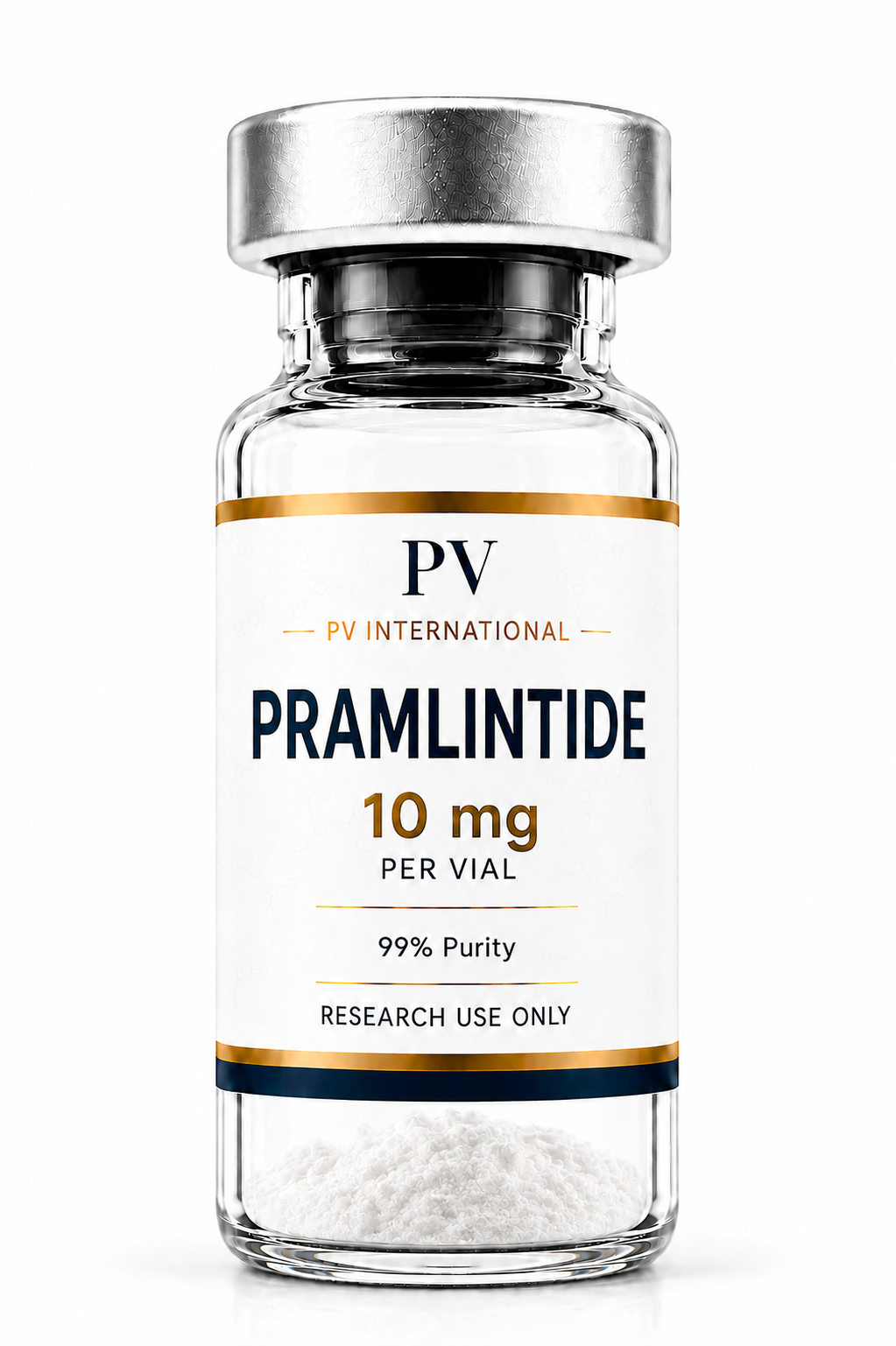

Pramlintide Injection, marketed under the brand name Symlin, represents a significant therapeutic advancement in the management of diabetes mellitus for patients requiring mealtime insulin. It is a synthetic analog of human amylin, a neuroendocrine hormone co-secreted with insulin from pancreatic beta cells. While insulin therapy addresses the core defect of glucose uptake and storage, Pramlintide Injection fills a complementary physiological void by targeting postprandial glucose excursions through mechanisms that insulin cannot replicate.
This product description provides an in-depth examination of pramlintide’s pharmacology, clinical applications, and, most importantly, its multifaceted health benefits, including improved glycemic control, weight management, and potential cardiovascular risk reduction. The document also addresses safety considerations, patient selection criteria, and the broader clinical context in which this therapy operates, offering a complete profile of a medication that, despite its established efficacy, remains underutilized in contemporary diabetes care.
Introduction and Product Identification
The Physiological Rationale for Amylin Replacement
Diabetes mellitus is fundamentally a disease of multiple hormonal deficiencies. For decades, the therapeutic paradigm focused almost exclusively on insulin replacement or enhancement. However, the discovery and characterization of amylin—a 37-amino acid peptide hormone co-packaged and co-secreted with insulin from the beta cells of the pancreas—revealed a more complex picture of glucose homeostasis . In healthy individuals, amylin acts in concert with insulin to modulate the rate of glucose appearance in the bloodstream following a meal. It achieves this through three principal mechanisms: slowing gastric emptying, suppressing postprandial glucagon secretion, and inducing satiety .
In patients with type 1 diabetes, amylin secretion is essentially absent due to the autoimmune destruction of beta cells. In type 2 diabetes, amylin secretion is impaired and deficient to a degree that correlates with the severity of beta-cell secretory failure .
This dual deficiency—of both insulin and amylin—contributes to the exaggerated postprandial glucose excursions and the erratic glycemic patterns characteristic of diabetes. Pramlintide Injection was engineered to address this specific hormonal gap. As a synthetic, chimeric peptide analog of human amylin, it possesses the metabolic properties of the native hormone while avoiding the amyloidogenic propensity of human amylin, which can form toxic fibrils in the pancreas .
Regulatory Status and Formulation
Pramlintide Injection received initial U.S. Food and Drug Administration approval in March 2005. It is indicated as an adjunctive treatment in patients with type 1 or type 2 diabetes who use mealtime insulin therapy and who have failed to achieve desired glucose control despite optimal insulin therapy .
Pramlintide Injection is formulated as a clear, isotonic, sterile solution for subcutaneous administration, available in two multi-dose pen-injector strengths: the SymlinPen 60 (1.5 mL, delivering doses of 15, 30, 45, or 60 mcg) and the SymlinPen 120 (2.7 mL, delivering doses of 60 or 120 mcg) . It is important to note that pramlintide is not indicated for use in patients who require insulin only for basal coverage or in those who are unable to adhere to the rigorous glucose monitoring and insulin dose-adjustment protocols required for safe use .
Mechanism of Action: A Tripartite Approach to Glycemic Control
The health benefits of Pramlintide Injection are direct consequences of its physiological mechanisms, which complement rather than duplicate the actions of insulin. Understanding these mechanisms is essential for appreciating the unique therapeutic niche the drug occupies.
Modulation of Gastric Emptying
The rate at which nutrients are released from the stomach into the small intestine is a critical determinant of the postprandial rise in plasma glucose. Pramlintide Injection slows gastric emptying without altering the net absorption of carbohydrates or other nutrients . This deceleration attenuates the initial, sharp peak in postprandial glucose that occurs after a meal, effectively “flattening” the glucose curve.
The effect lasts for approximately three hours following administration, aligning with the postprandial window during which glucose excursions are most problematic . This mechanism is particularly valuable because it addresses a dimension of glycemic control that even the most sophisticated rapid-acting insulin analogs cannot fully replicate: the rate of nutrient entry into the circulation.
Suppression of Postprandial Glucagon Secretion
In patients with diabetes, glucagon concentrations are inappropriately elevated during the postprandial period. This excess glucagon stimulates hepatic glucose production at a time when the body should be suppressing it, contributing significantly to hyperglycemia. Insulin alone does not fully normalize this defect. Pramlintide has been shown to decrease postprandial glucagon concentrations in insulin-using patients with diabetes, thereby reducing endogenous glucose output from the liver . This action is synergistic with insulin’s suppression of hepatic glucose production and represents a key differentiator from insulin monotherapy.
Satiety and Reduced Caloric Intake
Pramlintide Injection acts centrally to modulate appetite, promoting satiety and reducing food intake. In a controlled clinical study, a single subcutaneous dose of pramlintide administered before an unlimited buffet meal was associated with placebo-subtracted mean reductions in total caloric intake of approximately 21% in patients with type 1 diabetes and 23% in patients with type 2 diabetes .
Crucially, this reduction occurred without a decrease in meal duration, suggesting a genuine enhancement of satiety signaling rather than a nonspecific aversive effect. The anorectic effect appears to be independent of the nausea that can accompany treatment, although the two phenomena may be related in some patients . This mechanism directly addresses a major clinical challenge in diabetes management: weight gain associated with intensive insulin therapy.
Health Benefits of Pramlintide Injection
Improved Postprandial Glycemic Control
The most immediate and direct health benefit of pramlintide is its ability to reduce postprandial glucose excursions. Postprandial hyperglycemia is increasingly recognized as an independent risk factor for microvascular and macrovascular complications, potentially more predictive of cardiovascular events than fasting glucose or HbA1c alone . By slowing gastric emptying, suppressing glucagon, and reducing caloric intake, Pramlintide Injection targets the postprandial period with a multi-pronged approach.
Clinical studies employing mixed-meal tests have demonstrated that pramlintide, administered immediately prior to a meal, reduces plasma glucose concentrations following the meal when used with mealtime insulin, whether rapid-acting analogs or regular human insulin are employed . Continuous glucose monitoring studies have further shown that pramlintide reduces 24-hour glucose fluctuations, indicating a stabilizing effect on glycemic variability that extends beyond the immediate postprandial window . This reduction in glycemic variability is clinically meaningful, as emerging evidence links glucose swings to oxidative stress and endothelial dysfunction.
Reduction in HbA1c
While Pramlintide Injection effects on postprandial glucose are immediate, its impact on HbA1c—the standard measure of long-term glycemic control—is more modest but nonetheless clinically significant. Clinical trials have shown that pramlintide therapy decreases hemoglobin A1c, serum fructosamine, and total cholesterol levels .
The HbA1c reduction achieved with Pramlintide Injection is typically in the range of 0.3% to 0.7%, which, while less dramatic than that seen with some other agents, is achieved through mechanisms that are complementary to insulin and do not rely on increased insulin exposure. For patients who have exhausted optimization of insulin regimens but remain above target, this additional reduction can be meaningful, particularly when achieved without the weight gain that often accompanies intensified insulin therapy.
Weight Management and Body Composition
Perhaps the most distinctive health benefit of Pramlintide Injection in the context of diabetes pharmacotherapy is its favorable effect on body weight. Insulin therapy, while essential for survival in type 1 diabetes and often necessary in type 2 diabetes, is associated with weight gain—a side effect that can exacerbate insulin resistance and increase cardiovascular risk. Pramlintide offers a rare combination: improved glycemic control with concurrent weight reduction.
Clinical trials have consistently shown that Pramlintide Injection treatment is associated with reductions in body weight in patients with diabetes using mealtime insulin . This effect is mediated by the satiety-inducing properties of the drug, which reduce caloric intake without requiring deliberate dietary restriction. For patients with type 2 diabetes, in whom obesity is both a cause and a consequence of the disease, this dual benefit addresses a fundamental therapeutic tension. The ability to improve glucose control while facilitating weight loss, rather than weight gain, represents a significant advantage over many alternative strategies for intensifying diabetes therapy.
Cardiovascular Risk Reduction and Oxidative Stress
The health benefits of Pramlintide Injection extend beyond glycemic metrics to encompass markers of cardiovascular risk. Treatment with pramlintide has been associated with improvements in markers of oxidative stress and cardiovascular risk . Given that cardiovascular disease is the leading cause of morbidity and mortality in patients with diabetes, any intervention that favorably modulates cardiovascular risk factors is of considerable clinical interest.
While large-scale cardiovascular outcome trials specifically for pramlintide have not been conducted, the mechanistic plausibility of cardiovascular benefit—through reduced postprandial hyperglycemia, reduced glycemic variability, weight loss, and improved lipid profiles—is compelling. The reduction in total cholesterol observed in clinical trials further supports a potential role in comprehensive cardiovascular risk management .
Improved Patient-Reported Treatment Satisfaction
An often-overlooked aspect of therapeutic benefit is the patient’s experience of treatment. Pramlintide treatment has been associated with improved patient-reported treatment satisfaction . This may seem counterintuitive for a medication that requires additional injections and carries a risk of nausea. However, the combination of improved glycemic control, weight loss, and the sense of greater control over postprandial glucose excursions may contribute to a more positive treatment experience for some patients. For individuals who have struggled with the limitations of insulin monotherapy, Pramlintide Injection offers a sense of addressing a previously unmet need. The availability of a pen-injector device with dose flexibility further supports ease of use and patient autonomy.
Safety Profile and Tolerability
Hypoglycemia Risk and Mitigation Strategies
The most significant safety consideration with Pramlintide Injection is the risk of severe hypoglycemia, particularly in patients with type 1 diabetes. This risk is not due to Pramlintide Injection itself causing hypoglycemia—the drug does not alter the counter-regulatory hormonal response to insulin-induced hypoglycemia, nor does it alter the perception of hypoglycemic symptoms at plasma glucose concentrations as low as 45 mg/dL . Rather, the risk arises from the additive glucose-lowering effects of Pramlintide Injection when used in conjunction with insulin.
To mitigate this risk, the prescribing protocol mandates a 50% reduction in mealtime insulin doses upon initiation of pramlintide therapy, followed by individualized titration based on glycemic control and tolerability . Patients must be able to fully understand and adhere to proper insulin adjustment and glucose monitoring protocols. Pramlintide should not be used in patients with recurrent unexplained hypoglycemia or hypoglycemia unawareness, as these patients are at particularly high risk for severe events . The FDA label includes a boxed warning regarding the risk of severe hypoglycemia, emphasizing the need for appropriate patient selection, careful instruction, and insulin dose reduction .
Gastrointestinal Effects
The most frequent treatment-emergent adverse event is nausea, typically mild to moderate in severity and diminishing over time with continued use . Nausea is dose-related and is the primary reason for the recommended slow titration schedule, which requires waiting at least three days before advancing to the next dose increment .
Vomiting, anorexia, and headache are also reported, with incidences of 5% or greater and higher than placebo . The nausea is thought to be an extension of the gastric-emptying and satiety effects of the drug, reflecting its mechanism of action rather than an idiosyncratic reaction. While bothersome for some patients, it is generally transient and manageable with careful titration.
Contraindications and Precautions
Pramlintide Injection is contraindicated in patients with confirmed gastroparesis, as the drug’s gastric-slowing effects could exacerbate this condition . It should also be avoided in patients with HbA1c >9%, who may require more aggressive therapeutic approaches, and in those requiring medications that stimulate gastrointestinal motility, which would counteract pramlintide’s effects .
Because pramlintide slows gastric emptying, concomitant oral medications that require rapid onset or threshold concentrations for efficacy should be administered at least one hour before or two hours after pramlintide injection . Pramlintide and insulin must never be mixed in the same syringe, as mixing can alter the pharmacokinetics of both products; they must be administered as separate injections .
Clinical Application and Patient Selection
Dosing and Administration
Pramlintide Injection dosing differs by diabetes type. For patients with type 1 diabetes, the initial dose is 15 mcg subcutaneously immediately prior to each major meal, titrated in 15 mcg increments to a maximum of 60 mcg per meal. For patients with type 2 diabetes using mealtime insulin, the initial dose is 60 mcg, titrated in 60 mcg increments to a maximum of 120 mcg per meal .
In both populations, the mealtime insulin dose should be reduced by 50% at initiation. Dose titration should proceed only after clinically significant nausea has been absent for at least three days. If nausea persists at higher doses, the dose may be reduced; if the reduced dose is not tolerated, discontinuation may be necessary . Pramlintide should not be injected if the patient has low blood sugar, does not plan to eat, or plans to eat a meal with less than 250 calories or 30 grams of carbohydrate .
The Ideal Candidate
The ideal candidate for Pramlintide Injection therapy is a patient with type 1 or type 2 diabetes who uses mealtime insulin, has persistent postprandial hyperglycemia despite optimized insulin therapy, and is motivated and capable of adhering to frequent glucose monitoring and insulin dose adjustments. Patients who struggle with weight gain related to insulin therapy may find the weight-neutral to weight-reducing profile of pramlintide particularly attractive. The drug is best suited for patients with reasonable glycemic control (HbA1c ≤9%) who need fine-tuning of postprandial excursions rather than those with severely uncontrolled diabetes who require more fundamental therapeutic restructuring .
Practical Considerations for Use
The pharmacokinetics of pramlintide are notable for their rapid absorption and short duration of action. Following subcutaneous administration, peak plasma concentrations are reached in approximately 20 minutes, with an elimination half-life of about 48 minutes . This rapid onset aligns with the need to modulate early postprandial events, but it also means that timing of injection relative to meals is critical.
Pramlintide Injection should be injected immediately prior to a major meal. Injection into the abdomen or thigh is preferred over the arm, as arm injection in obese patients has been associated with higher and more variable exposure . The absolute bioavailability of pramlintide is approximately 30% to 40%, and exposure is dose-proportional across the therapeutic range .
A significant practical challenge in the use of pramlintide is the mismatch between its pharmacokinetic profile and that of rapid-acting insulin analogs. While pramlintide peaks at around 20 minutes, insulin analogs typically peak at 60 to 90 minutes . This asynchrony means that the effects of the two hormones do not perfectly overlap, potentially limiting the degree of postprandial glucose reduction that can be achieved with separate injections.
Research into co-formulation strategies and controlled-release delivery systems is ongoing, with the goal of better aligning the pharmacokinetics of pramlintide and insulin to maximize their combined efficacy . A co-formulation of pramlintide with insulin aspart (ADO09) has shown promise in early clinical studies, improving postprandial glucose and short-term glycemic control compared to insulin aspart alone .
Conclusion
Pramlintide Injection represents a therapeutic option that addresses a fundamental and often-neglected aspect of diabetes pathophysiology: the deficiency of amylin. Its health benefits are multifaceted, extending from improved postprandial glycemic control and reduced glycemic variability to weight reduction and favorable modulation of cardiovascular risk markers. For patients with type 1 or type 2 diabetes who use mealtime insulin and who continue to experience suboptimal control despite optimized insulin regimens, Pramlintide Injection offers a mechanism of action that is genuinely complementary to insulin rather than merely additive.
The challenges associated with pramlintide—the risk of hypoglycemia requiring careful insulin dose reduction, the need for frequent glucose monitoring, the transient nausea that necessitates slow titration, and the requirement for separate injections—are real and require committed patient and clinician engagement. However, for the appropriately selected and well-instructed patient, these challenges are manageable and are offset by benefits that are not readily achieved with other available therapies.
In an era of rapid innovation in diabetes pharmacotherapy, with new classes of agents emerging for type 2 diabetes, Pramlintide Injection remains a unique and valuable option for insulin-requiring patients, particularly those for whom weight management and postprandial control are priority concerns. Its continued availability and clinical utility underscore the importance of addressing the full spectrum of hormonal deficiencies in diabetes, not merely the most obvious one.
Reviews
There are no reviews yet.