

Thymosin alpha 1 exerts pleiotropic effects on the immune system, acting through multiple pathways to modulate both innate and adaptive immune responses.
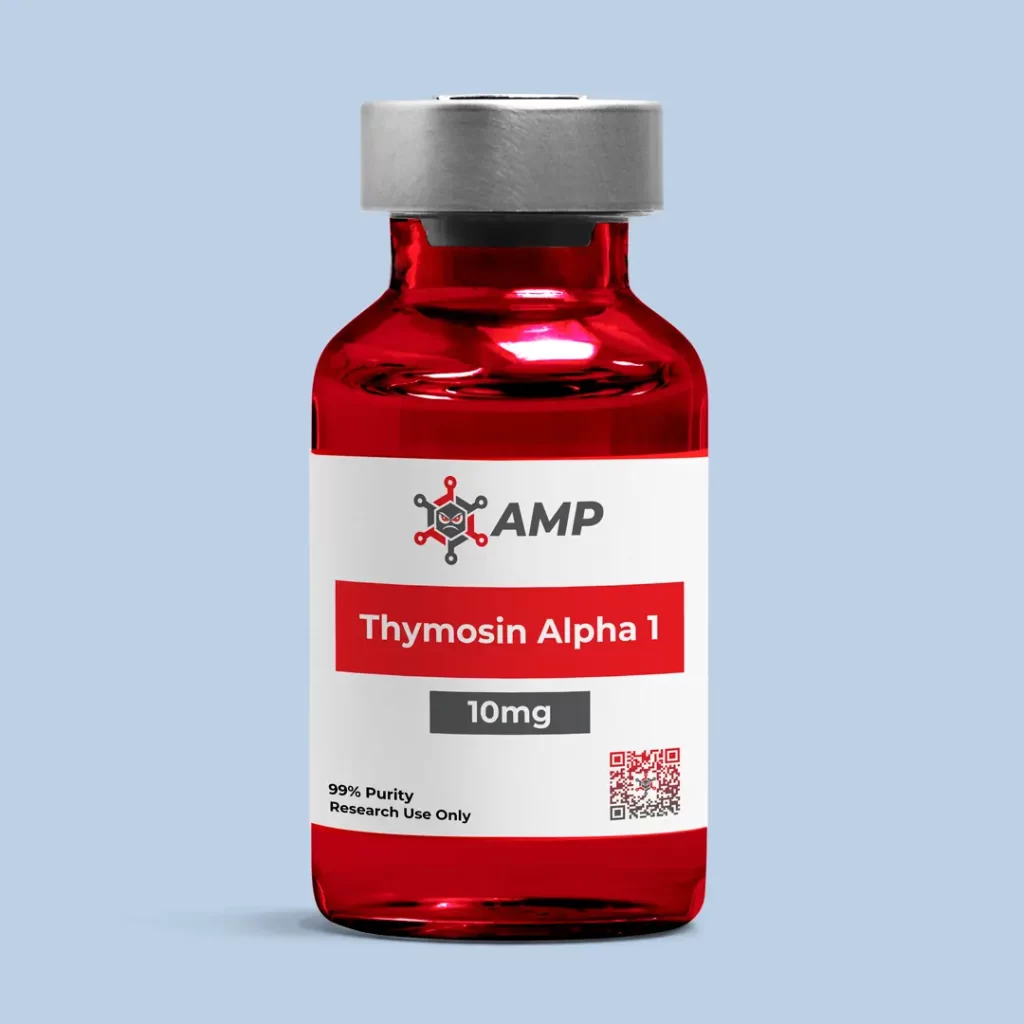
Thymosin Alpha 1, also known as Thymosin Alpha, TA1, or T α 1, is a fragment of a protein molecule that has been widely studied for its potential implications with the immune system. Researchers have hypothesized that it contributes to the production of T-cells to mitigate and alleviate infection and bacterial spread.
Thymosin Alpha 1 is a naturally occurring polypeptide that is considered by researchers to potentially restore and enhance immune functions. Thymosin Alpha-1 is considered to be one of the polypeptides found in Thymosin Fraction 5, which is a crude extract of the thymus gland.
Thymosin alpha 1 (Tα1), also known by its international nonproprietary name thymalfasin, is a synthetic 28-amino acid peptide that is structurally and functionally identical to the endogenous peptide first isolated from calf thymus tissue by Allan Goldstein and colleagues in 1977.
The peptide is physiologically present in the human body as the N-terminal cleavage product of prothymosin alpha (ProTα), a highly acidic nuclear protein consisting of 109 amino acid residues. The cleavage is mediated by the lysosomal asparaginyl endopeptidase (legumain; δ-secretase), which releases the N-terminally acetylated 28-residue peptide.
The molecular formula of Tα1 (free base) is C₁₂₉H₂₁₅N₃₃O₅₅, and its molecular weight is 3108.3 g/mol. The peptide is highly acidic, with an isoelectric point of approximately 4.2, owing to the presence of multiple aspartic acid (Asp) and glutamic acid (Glu) residues in its sequence. The amino acid sequence of Tα1 is Ac-Ser-Asp-Ala-Ala-Val-Asp-Thr-Ser-Ser-Glu-Ile-Thr-Thr-Lys-Asp-Leu-Lys-Glu-Lys-Lys-Glu-Val-Val-Glu-Glu-Ala-Glu-Asn-OH.
Notably, the peptide lacks aromatic amino acids and sulfur-containing residues, which has implications for its analytical detection and structural stability. The N-terminal acetylation is a critical structural feature that protects the peptide from exopeptidase degradation and is essential for its biological activity.
The CAS registry number for thymosin alpha 1 is 62304-98-7, and the peptide is commercially available in both free base and acetate salt forms. The acetate salt form is typically used in pharmaceutical preparations due to its improved solubility and stability characteristics. The chemical structure of Tα1 was confirmed through extensive analytical characterization, including amino acid analysis, mass spectrometry, and nuclear magnetic resonance spectroscopy, and the synthetic peptide has been demonstrated to be identical in amino acid sequence to the natural peptide.
Thymosin alpha 1 exerts pleiotropic effects on the immune system, acting through multiple pathways to modulate both innate and adaptive immune responses. The peptide’s central mechanism of action involves the activation of Toll-like receptors (TLRs) on dendritic cells (DCs), which serve as critical sentinels of the immune system capable of sensing infection and tissue stress and translating this information into appropriate immune responses.
Toll-Like Receptor Signaling
Tα1 acts through TLR2 and TLR9 on both myeloid and plasmacytoid dendritic cells, leading to the activation of intracellular signaling pathways that culminate in the production of immune-related cytokines. Specifically, the peptide binds to TLR3, TLR4, and TLR9, activating downstream IRF3 and NF-κB signal pathways, which promote the proliferation and activation of target immune cells.
In plasmacytoid dendritic cells, Tα1 activates the TLR9/MyD88-dependent viral recognition pathway, leading to the activation of interferon regulatory factor 7 (IRF7) and the promotion of the IFN-α/IFN-γ-dependent effector pathway. This signaling cascade results in enhanced antiviral and antitumor immune responses.
T-Cell Activation and Differentiation
Thymosin alpha 1 promotes the maturation and differentiation of T lymphocytes and modulates mature immune responses to antigens and mitogens. The peptide enhances phytohemagglutinin (PHA)-induced interleukin-2 (IL-2) secretion and interleukin-2 receptor (IL-2R) expression in human mononuclear cells. Both helper/inducer (CD4+) and cytotoxic/suppressor (CD8+) T-cell populations are targets of thymosin activity, indicating a broad effect on T-cell-mediated immunity.
Recent studies have demonstrated that Tα1 promotes functional activation of CD8+ T-cells and mitigates exhaustion marker expression following chronic stimulation, suggesting potential applications in conditions characterized by T-cell exhaustion, such as chronic viral infections and cancer.
Cytokine Modulation and Immune Homeostasis
Tα1 modulates the production of various cytokines and chemokines, shifting the immune response toward a Th1-dominant profile. The peptide increases the number of activated T helper (Th) cells and provokes a shift toward the Th1 subclass, thereby promoting cell-mediated immune responses.
Additionally, Tα1 induces indoleamine 2,3-dioxygenase (IDO) activity in dendritic cells, which affects tolerization toward self as well as microbial non-self-antigens, resulting in transplantation tolerance and protection from inflammatory allergy. This IDO-inducing property positions Tα1 as an endogenous regulator of immune homeostasis capable of controlling inflammation, immunity, and tolerance in various clinical settings.
Additional Mechanisms
Beyond its immunomodulatory effects, Tα1 has been shown to block steroid-induced apoptosis of thymocytes, thereby protecting immune cells from glucocorticoid-mediated cell death. The peptide also upregulates the expression of major histocompatibility complex class I (MHC I) molecules on both normal and transformed cells, resulting in increased antigen presentation and enhanced immune recognition of infected or malignant cells. Furthermore, Tα1 mediates increased intracellular glutathione (GSH) levels, which not only inhibits the growth of certain cancer cells in vitro but also blocks the assembly of virus particles by hindering disulfide bond formation required for envelope glycoprotein oligomerization.
Solid-Phase Peptide Synthesis
The primary method for commercial production of thymosin alpha 1 is solid-phase peptide synthesis (SPPS), which has been developed and optimized over several decades. The SPPS approach involves the stepwise assembly of the peptide chain on a solid resin support, with each amino acid added sequentially using protected amino acid derivatives.
The original synthesis of Tα1 utilized tert-butyloxycarbonyl (Boc) chemistry with aminoacyl-4-(oxymethyl)phenylacetamidomethyl-resin, which resulted in improved yields and allowed purification by simple ion-exchange and gel filtration chromatography. The success of this synthesis was largely attributed to the enhanced stability of the peptide-resin linkage to trifluoroacetic acid and the elimination of hydroxy functions on the resin. Subsequent improvements employed 4-methyloxybenzyloxycarbonyl (Moz) as the α-amino protecting group, which offered advantages over Boc-amino acids including higher yields and reduced side reactions.
Modern SPPS of Tα1 typically employs Fmoc (9-fluorenylmethyloxycarbonyl) chemistry, which uses milder conditions for deprotection and is compatible with a wider range of functional groups. The synthesis involves the sequential coupling of protected amino acids to a solid support, followed by cleavage from the resin and global deprotection of side-chain protecting groups using trifluoroacetic acid (TFA) with appropriate scavengers such as anisole and thioanisole. The crude peptide is then purified by preparative reverse-phase high-performance liquid chromatography (RP-HPLC) to achieve the high purity levels required for pharmaceutical use.
Recombinant Production
In addition to chemical synthesis, recombinant DNA technology has been explored for the production of Tα1. Recombinant production offers potential advantages in terms of scalability and cost-effectiveness for large-scale manufacturing. Several expression systems have been developed, including prokaryotic (Escherichia coli) and eukaryotic systems.
One approach involves the expression of Tα1 as a fusion protein in E. coli. A Tα1-Intein fusion protein has been constructed, in which Tα1 is fused to the N-terminus of the smallest mini-intein, with a His tag added at the C-terminus for purification. Under optimal conditions, this system yielded more than 24.5 mg of Tα1 per liter of culture media. Another strategy employs a fusion protein consisting of Tα1 and thioredoxin separated by a TEV (tobacco etch virus) protease cleavage site, with selective N-terminal acetylation of the obtained peptide using acetic anhydride.
An innovative approach involves the expression of a concatemer consisting of four copies of Tα1 in E. coli, followed by purification using a one-step heating method and cleavage with cyanogen bromide in 50%-70% trifluoroacetic acid to release monomeric Tα1. The use of N-terminal acetyltransferase (Nat) enzymes has also been explored to achieve efficient Nα-acetylation of recombinant Tα1, which is critical for its biological activity and stability.
Long-Acting Formulations
Given the short plasma half-life of native Tα1 (approximately 2 hours in humans), significant research has focused on developing long-acting formulations. PASylation technology, which involves fusion with a conformationally disordered Pro/Ala/Ser (PAS) polypeptide of 600 residues, has been shown to extend the plasma half-life of Tα1 in rats by more than a factor of 8 compared to the original synthetic peptide.
This size effect is attributed to retarded kidney filtration, as the expanded hydrodynamic volume of the PASylated peptide reduces renal clearance. This strategy addresses three major problems of peptide drugs: instability in the expression host, rapid degradation by serum exopeptidases, and low bioactivity due to fast renal clearance. Other approaches include fusion with mutant IgG1 CH3 domains, which extended the half-life of Tα1 from 3 hours to 47 hours in vivo.
Critical Quality Attributes
The production of thymosin alpha 1 for pharmaceutical use requires rigorous quality control to ensure product safety, purity, and potency. Critical quality attributes (CQAs) for injectable Tα1 products include sterility, bacterial endotoxins test (BET), and foreign particulates, which are critical safety factors. Bioburden load and BET are considered critical for bulk drug substances intended for compounding injections, and evaluation of solubility is essential to ensure that no precipitates or foreign particulates form in the compounded drug product.
Analytical Methods
High-performance liquid chromatography (HPLC) is the primary method for assessing the purity of Tα1. Reverse-phase HPLC using C18 columns is extensively applied for the analysis of Tα1 and its synthetic precursors. Because Tα1 lacks aromatic amino acids, it has no UV absorption at 280 nm, and detection is typically performed at 214 nm or 220 nm, where the peptide bond absorbs. Purity specifications for pharmaceutical-grade Tα1 typically require ≥98.0% by HPLC, with individual unspecified impurities limited to ≤1.0%.
Mass spectrometry (MS) is employed for identity confirmation and molecular weight determination. The theoretical molecular weight of Tα1 is 3108.28 Da, and electrospray ionization mass spectrometry (ESI-MS) is used to confirm that the observed mass matches the theoretical value. Liquid chromatography-tandem mass spectrometry (LC-MS/MS) methods have been developed for quantitative analysis of Tα1 in human serum, with a lower quantitation limit of 0.5 ng/mL.
Additional quality control parameters include peptide content determination by nitrogen analysis (typically ≥80.0%), water content by Karl Fischer titration (≤7.0%), trifluoroacetic acid content (≤1.0%), and solubility testing. The specific optical rotation of Tα1 is approximately -108.7° (c=5, 0.02M phosphate), which provides information about the peptide’s conformational integrity.
Stability and Storage
Lyophilized Thymosin alpha 1 is stable at room temperature for up to three weeks, but long-term storage requires desiccation and temperatures below -18°C. Upon reconstitution, the peptide should be stored at 4°C for 2-7 days, and for future use, below -18°C. For long-term storage of reconstituted solutions, the addition of a carrier protein such as 0.1% human serum albumin (HSA) or bovine serum albumin (BSA) is recommended to prevent adsorption losses and aggregation. Repeated freeze-thaw cycles should be avoided to maintain peptide integrity.
FDA notes that peptides such as Tα1 can be extremely sensitive to product formulation, process, and environmental conditions (e.g., pH, temperature, concentration, in-process related impurities, excipients), which may lead to aggregation and degradation of the peptide, potentially resulting in loss of biological activity. Uncontrolled manufacturing processes and impurities may increase the risk of product aggregation, especially for Tα1, which has consecutive β-branched amino acids in its structure and a tendency to form β-sheet structures.
Absorption and Distribution
Thymosin alpha 1 is rapidly absorbed following subcutaneous administration, with peak serum levels achieved at approximately 2 hours post-injection (Tmax ≈ 2 h). The peptide is intended for subcutaneous injection and should not be given intravenously. The recommended dose for chronic hepatitis B is 1.6 mg (900 mcg/m²) administered subcutaneously twice weekly, with doses separated by 3 or 4 days. Patients weighing less than 40 kg should receive a dose of 40 mcg/kg.
Metabolism and Elimination
The serum half-life of Thymosin alpha 1 in humans is approximately 2 hours, and there is no evidence of accumulation following multiple administrations. The small size of the peptide (3108 Da) results in rapid elimination via renal filtration, which limits its clinical efficacy and requires frequent dosing. The terminal plasma half-life in humans is less than 3 hours. This pharmacokinetic profile has motivated the development of long-acting formulations, as discussed in Section 3.3.
Dose-Response and Safety
Phase I clinical trials have demonstrated that Thymosin alpha 1 is tolerated without toxicity over a dose range of 600 μg/m² to 9.6 mg/m². In a study of patients with advanced and refractory solid tumors, those who received 3.2 mg Tα1 subcutaneously as a daily loading dose for 7 days experienced no Grade ≥3 treatment-related adverse events. Most adverse events are mild and transient, primarily including pain or burning sensation at the injection site, erythema, fever, nausea, and symptoms of malaise. No clinically significant adverse reactions attributable to thymosin alpha 1 administration have been reported in the literature.
Chronic Hepatitis B and C
Thymosin alpha 1 is approved in more than 35 countries for the treatment of chronic hepatitis B and C, and as an immune stimulant and adjuvant. For chronic hepatitis B, ZADAXIN (the brand name for thymalfasin) is indicated as monotherapy or in combination with interferon. Pooled analysis of three randomized controlled trials comprising 223 patients demonstrated that Tα1 administered twice weekly for 6 months resulted in a 40.6% virological response rate versus 9.4% in controls.
A delayed therapeutic response can occur 12 months or longer after completion of therapy, and a transient increase in ALT to more than twice baseline value (flare) may occur during therapy, which generally warrants continuation of treatment unless signs and symptoms of liver failure are observed.
For chronic hepatitis C, Tα1 is indicated as combination therapy with interferon. Pooled intent-to-treat analysis demonstrated sustained biochemical (ALT) response in 22.4% of patients treated with combination therapy compared to 9.3% with interferon alone.
Sepsis and Critical Illness
The efficacy of Thymosin alpha 1 in sepsis has been investigated in multiple clinical trials with mixed results. An earlier multicenter trial suggested a borderline mortality benefit, but the larger, double-blind Phase 3 TESTS trial (N=1,089) found no reduction in 28-day sepsis mortality.
In the TESTS trial, 28-day all-cause mortality occurred in 24.1% of the placebo group, with no statistically significant difference between treatment groups, and no secondary or safety outcomes differed significantly. A 2025 meta-analysis found that the apparent benefit disappeared in higher-quality studies. However, subgroup analyses from other studies have suggested potential benefits in specific populations, such as patients with severe/critical COVID-19 and those with hepatitis B virus-related acute-on-chronic liver failure.
Cancer and Immunotherapy
Tα1 has been investigated as an adjuvant in cancer treatment, with early clinical trials in non-small cell lung cancer patients demonstrating significant improvements in relapse-free and overall survival, most pronounced in patients with nonbulky tumors.
The peptide is currently in clinical trials worldwide for the treatment of several types of cancer, including hepatocellular carcinoma. The immunostimulatory properties of Thymosin alpha 1, including enhancement of T-cell and dendritic cell responses and upregulation of MHC class I molecules, support its potential utility as an immune adjuvant in oncology.
Global Regulatory Landscape
Thymosin alpha 1 is a licensed medicine in more than 35 countries for indications including chronic hepatitis B and C, and as an immune adjuvant. In China, the peptide has been approved since 1996, and it has also received orphan drug designation in the United States for certain indications. The European market shows established clinical use in several countries, with regulatory approval for specific indications and growing research into expanded therapeutic applications.
In the United States, thymosin alpha 1 has received FDA marketing approval. As of 2026, it remains unregulated, with products available under various names through wellness and compounding channels. In late 2023, the FDA moved 19 peptides—including thymosin alpha-1—to the Category 2 list, which prohibits pharmacists from using these ingredients for compounding. The FDA has raised concerns about the safety and efficacy of compounded Tα1, citing the lack of a USP drug substance monograph and the potential for aggregation and degradation under uncontrolled manufacturing conditions. However, Thymosin alpha 1 remains of interest for its potential therapeutic applications, and a Thymosin Alpha-1 transdermal patch has entered formal testing in the United States.
Market Size and Growth
The global thymosin alpha 1 market is projected to reach 0.8-1.2 billion USD by 2025, with an estimated compound annual growth rate (CAGR) of 5.5%-7.5% through 2030. The Asia Pacific region dominates the market with growth rates of 6.5%-8.5%, primarily driven by large hepatitis B patient populations in China and established clinical use and regulatory approval.
China represents the largest market with multiple domestic manufacturers and strong clinical adoption for hepatitis B treatment. North America exhibits growth rates of 4.5%-6.2%, characterized by advanced research institutions and expanding clinical trials, while Europe shows growth rates of 5.0%-6.8% with established clinical use in several countries.
The market benefits from growing awareness of immunotherapy potential, expanding hepatitis B treatment requirements, increasing autoimmune disease prevalence, and advancing understanding of immune system modulation. The injectable formulation dominates the market with projected growth of 6.2%-7.8%, while capsule formulations represent a smaller but growing segment.
Conclusion On Thymosin Alpha 1
Thymosin alpha 1 represents a well-characterized immunomodulatory peptide with a established manufacturing infrastructure and a growing body of clinical evidence supporting its therapeutic utility. Its pleiotropic mechanism of action, centered on Toll-like receptor signaling in dendritic cells and modulation of T-cell responses, positions it as a versatile agent for immune enhancement and modulation.
The production of Thymosin alpha 1 through solid-phase peptide synthesis and recombinant technologies ensures a reliable supply of high-purity peptide for pharmaceutical applications, while ongoing research into long-acting formulations addresses the limitations imposed by its short plasma half-life. With regulatory approval in more than 35 countries and a growing global market, Thymosin alpha 1 remains a valuable therapeutic option for chronic viral infections, immune deficiencies, and as an adjuvant in cancer immunotherapy. Continued clinical research and regulatory review will further define its optimal applications and expand its therapeutic reach.
| Choose | 10mg Vial, 500mcg Capsules |
|---|---|
| Quantity | 1 Vial, 2 Vials, 5 Vials, 10 Vials, 30 Capsules, 60 Capsules, 100 Capsules |
Only logged in customers who have purchased this product may leave a review.

Reviews
There are no reviews yet.